Have you ever grown a flower that makes you want to stop whatever you're doing and take another look? That's celosia for me! I love walking through the garden and seeing those bright, feathery plumes standing above the foliage, or discovering a big, velvety cockscomb that looks more like a piece of coral than a flower. I've grown several kinds over the years, including varieties I received as complimentary seed for testing through All-America Selections, and their colors and unusual shapes still make me smile. I've even grown celosia in my greenhouse, where the plants showed me just how impressive they can become.
And here's what makes celosia even more exciting: some kinds are useful well beyond the flower garden. Imagine cutting armfuls of blooms for fresh bouquets, drying a few to brighten your home in winter, saving seed for another season, or growing an edible type for tender greens. Certain food-safe celosia flowers can even be used in tea and colorful drinks like lemonade. Of course, not every ornamental variety should go on your dinner plate, and we'll talk about how to tell the difference. Whether you're dreaming of gorgeous flowers, curious about edible celosia, or wondering how to start those tiny seeds, I want to share what I've learned so you can enjoy growing this remarkable plant, too.
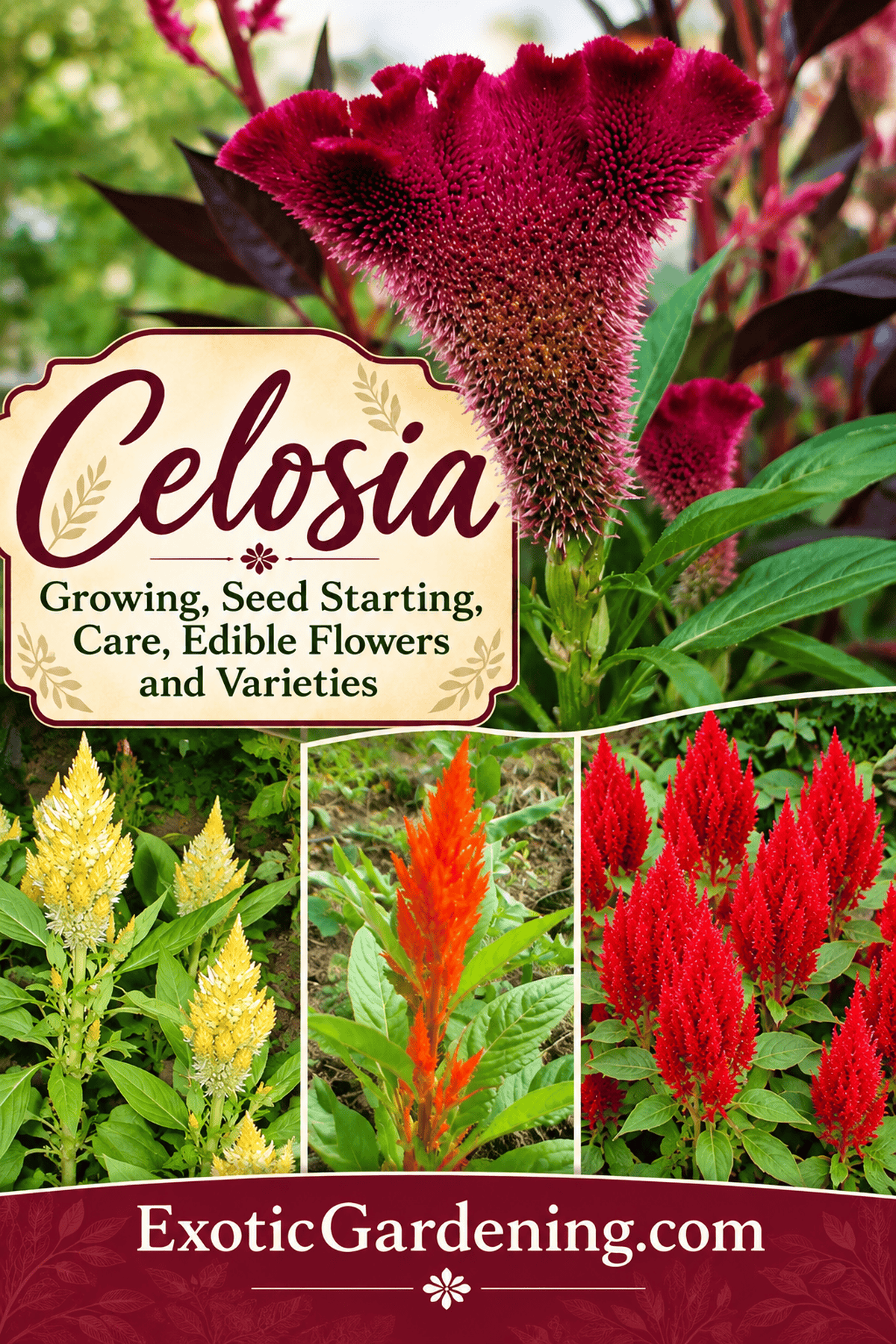
At first glance, you might not guess that celosia belongs to the amaranth family. But look closely at those wonderfully strange flowerheads, and you'll see the resemblance as well as why I enjoy growing it. Celosia includes both ornamental plants and types grown for their nutritious young greens. It thrives during the warm part of the growing season. In Indiana it is generally grown as a frost-tender annual, although some species are perennial in tropical climates. The flowers are not ordinary petals arranged around a center. They are dense collections of tiny flowers arranged into dramatic plumes, spikes or folded combs. Celosia can be a bedding plant, a greenhouse crop, a cut flower, a dried everlasting, a seed-saving project and, when the correct edible type is grown safely, a leafy vegetable.
That versatility is exactly why I keep coming back to celosia. A compact bedding celosia may stand only a foot tall, while tall cut-flower strains can produce stems several feet high. The difference is not simply fertilizer or greenhouse magic. Genetics, root space, light, temperature, spacing, pinching and the timing of flowering all affect the result.
The Three Main Types of Celosia
Crested or Cockscomb Celosia
Crested types develop broad, folded, velvety flower heads that resemble coral or a rooster's comb. The botanical name is commonly written as Celosia argentea Cristata Group. Some are compact bedding plants, while florist selections produce large heads on long stems. Their unusual form makes them dramatic focal flowers in bouquets and excellent dried specimens.
Plumed Celosia
Plumosa Group celosias carry upright, feathery flower plumes in red, orange, gold, pink, purple and other shades. Some cultivars branch readily and produce many stems. They can serve as focal flowers or colorful fillers in bouquets, depending on plume size and stem length.
Wheat-Type Celosia
Spicata Group plants have slender, upright flower spikes reminiscent of wheat heads. They often create an airy effect in the garden and can be useful for cut flowers. The narrow spikes can also shed seed when harvested too late, so timing matters for fresh and dried arrangements.
These groups are often listed under Celosia argentea in modern horticultural references. Seed catalogs sometimes use older botanical combinations or simplified names, so always check the actual cultivar description.
The Celosia Varieties I've Grown and My AAS Seed Trials
One of the pleasures of being a gardener and garden writer is getting to grow plants and see what they actually do, rather than relying entirely on the picture on a seed packet or in a seed catalog. I received complimentary celosia seed for testing through All-America Selections (AAS), including Ice Cream Banana, Ice Cream Strawberry and Fresh Look Red. The seed was provided at no cost, but the plants I grew, the photographs and my impressions are my own. I want you to know that because I believe in being straightforward about where my seeds and plants come from.
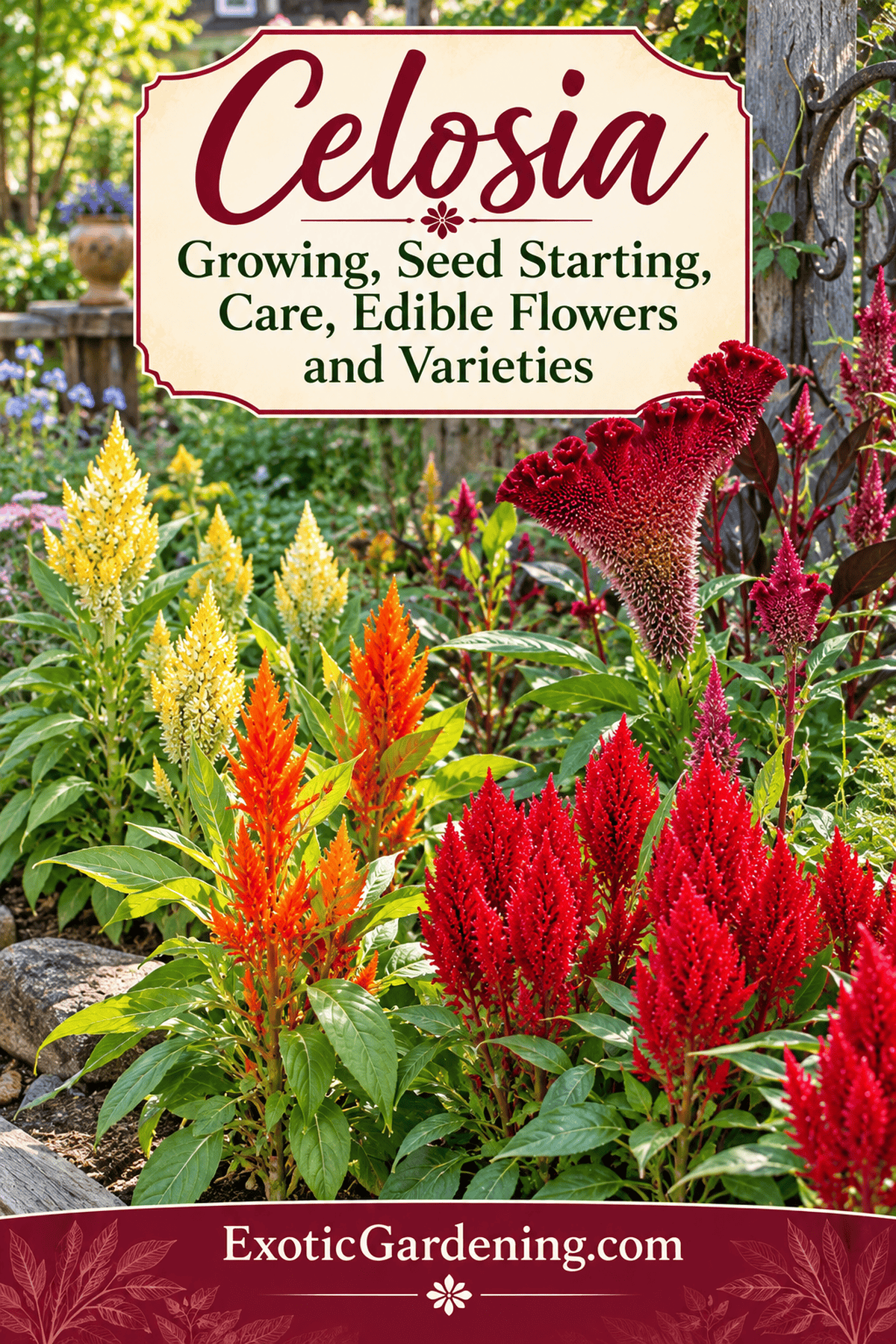
What a colorful group these turned out to be! Ice Cream Banana brings soft yellow plumes, Ice Cream Strawberry adds warm strawberry-red color, and Fresh Look Red makes a bold statement with its vivid red flowers. I've shared photographs of these varieties so you can see the different shapes and colors for yourself. These are examples from my own garden, not pictures of some generic celosia. AAS recognition and receiving seed for testing are two separate things, so I describe the varieties as AAS winners only where that status applies.
My other celosia photographs include a richly colored crested form whose precise cultivar name I have not confirmed. That flower shows another reason I love this genus: even when two plants are both called celosia, their blooms can look as different as a velvety coral fan and a feathery plume. If you want to grow several varieties, I encourage you to choose contrasting forms rather than relying on contrasting colors alone.
Why My Greenhouse Celosia Grew So Tall
If you've only seen the little celosias sold in garden-center packs, a tall greenhouse plant can be a real surprise. That's one reason I wanted to share my own growing experience: celosia is capable of looking very different from the compact plants many gardeners recognize. The celosia in my greenhouse was not the little bedding plant people expect from a garden-center six-pack. Its height is a reminder that the word “celosia” covers plants with very different mature sizes and growth habits. Warmth, generous light, sufficient root room, adequate fertility and a long uninterrupted growing period can all support vigorous growth. A greenhouse can extend that growing period, but it can also cause problems if plants become crowded, overheated or underlit.
For tall stems, begin with a cultivar bred for cut flowers rather than expecting a genetically dwarf variety to grow four feet tall. Keep seedlings growing without setbacks. Celosia is sensitive to cool temperatures and root restriction, and either can trigger early flowering on short plants. Give mature plants enough room, maintain even moisture and use support when large flower heads make stems top-heavy.
Choosing Celosia Varieties for Your Goals
Before buying seed, picture what you want to do with the flowers. Are you dreaming of a border packed with color, a vase full of long stems, or an edible planting you can harvest for the kitchen? The answer matters.
If the goal is a compact border, look for short, branching cultivars sold specifically for landscape use. For market bouquets, choose a cut-flower strain with long, straight stems and consistent flower size. For dried arrangements, select plumed or crested forms that retain their color well. For edible greens, choose a species or seed line explicitly sold for food use rather than assuming a chemically treated ornamental transplant is suitable for the kitchen.
When selecting seed, record the cultivar name, stated height, flower form, days to maturity, whether it is an F1 hybrid and whether the supplier recommends pinching. Those details will save considerable guesswork later.
Celosia Growing Conditions: Sun, Soil and Temperature
Celosia is happiest when summer finally feels like summer. Give it sunshine, warmth and soil that drains well, and it has the chance to put on a beautiful show. Celosia thrives in full sun and warm weather.
A cutting garden should receive at least six hours of direct sun, with eight or more hours desirable for strong, marketable stems.
Plant in fertile, well-drained soil that does not stay saturated after rainfall. University of Maryland Extension describes a slightly acidic soil pH around 6.0 to 6.4 as suitable for cut-flower production.
Celosia performs poorly when chilled or repeatedly waterlogged. Temperatures below 60°F can stunt young plants and encourage premature flowering. Wait for reliably warm nights before transplanting outdoors, even if the calendar says the average last frost has passed.
When to Start Celosia Seeds in Indiana Zone 6a
In my Indiana garden, the temptation to start seeds early is real, especially when the winter seems to drag on. Celosia, however, rewards patience more than enthusiasm with a seed tray. For a cold-climate garden, start celosia indoors roughly four to six weeks before your intended transplant date, adjusting for the seed supplier's recommendations.
In central Indiana, that often means sowing in April for planting in late May or early June, after frost danger has passed and nights are warm. Do not start so early that seedlings sit rootbound in small cells for weeks. A stressed celosia may flower prematurely on a short stem, and that lost growth is difficult to recover. If the spring remains unusually cool, hold plants in a warm, bright greenhouse with sufficient root room rather than forcing them into cold ground.
Celosia 'Carmine Glow' and 'Red Glow' Seed Packet Notes
I always encourage gardeners to save seed packets, even after the seeds are planted. Those little packets can hold useful clues when you're trying to understand why one variety behaves differently from another.
One of the seed packets in my collection lists Celosia argentea var. plumosa, Glow Series, including Carmine Glow and Red Glow. I like saving these details because they show how much the instructions can vary between specific cultivars and general growing guides. The packet lists approximately 1,100 seeds per gram, which gives you an idea of just how tiny celosia seed is.
It recommends covering the seed with vermiculite and maintaining a germination temperature of 75°F (24°C). Under those specified conditions, the packet gives a germination period of two to four days, considerably faster than the broader range often quoted for celosia.
For growing on, it lists 65 to 70°F (18 to 21°C), with 11 to 12 weeks to flower. The packet does not specify precisely which production stage starts that flowering count, so treat it as a planning guide rather than a guaranteed number of weeks from sowing. These are cultivar-specific instructions, not a reason to assume every celosia will germinate or bloom on the same schedule.
There is another useful distinction here. The Glow Series is described on the packet as compact and uniform, producing plants approximately 10 to 12 inches (25 to 30 cm) tall. That is very different from the tall greenhouse celosia I discuss elsewhere in this article. Choosing a compact strain and then trying to force it into a tall cut-flower crop will not change its genetics. For long stems, start with a cultivar selected for that purpose.
How to Start Celosia from Seed Step by Step
There is something exciting about opening a packet of celosia seed and imagining those tiny specks becoming big, colorful flowerheads. If you've never started celosia before, don't let the size of the seed intimidate you. If you want to see how I organize my trays, lights and supplies, take a look at my indoor seed-starting setup. You don't need fancy equipment, but you do need to give the seedlings a warm, gentle start. I like to think of the first few weeks as setting the stage for everything that comes later. A strong little plant has a much better chance of becoming the gorgeous celosia you're hoping for.
Start with clean containers and the right mix
I start with clean seed trays, individual cells or small pots filled with fresh seed-starting mix. Using individual cells makes transplanting easier because I can move the young plants without pulling their roots apart. Before sowing, moisten the mix so it feels evenly damp, like a sponge that has been wrung out. If water is dripping from the bottom or pooling on top, it is too wet. Let the excess drain away first.
Sow those tiny celosia seeds gently
Celosia seed is small, so resist the urge to dig a planting hole. Personally, I no longer cover my celosia seeds at all because I've found that I get better germination when I leave them on the surface. I place one or two seeds in each cell and gently press them into contact with the moist seed-starting mix without burying them. That is what works best for me, although I still recommend checking the directions for the particular variety you're growing. With uncovered seeds, keeping the surface evenly moist is especially important. I find it easier to work slowly with dry fingertips or the tip of a small tool than to scatter seed and hope for the best.
Give the seeds warmth without cooking them
Warmth is one of the biggest differences between success and frustration with celosia. Many varieties germinate well with the seed-starting mix around 72 to 80°F. A cold windowsill may look sunny, but it can keep the soil much cooler than you realize. A thermostatically controlled seedling heat mat can help if your indoor growing area is chilly. Check the temperature of the mix rather than assuming warmer is always better.
Keep the mix moist, not soggy
While you're waiting for sprouts, check the trays every day. Those shallowly sown seeds can dry out quickly, especially under lights or on a heat mat. Mist gently or water carefully from below so you don't wash the seed into a corner. At the same time, don't leave the containers sitting in water. Consistently saturated mix invites damping off, the frustrating problem that can make otherwise healthy-looking seedlings collapse.
Watch for seedlings, then move them into good light
This is the part I always look forward to: spotting the first tiny green seedlings! Many celosias emerge in roughly 8 to 14 days under favorable conditions, but your own packet may give a different estimate. For example, the Glow Series packet I discuss elsewhere in this article lists a much shorter germination window. Follow the directions for the seed you're actually growing and remember that temperature and seed freshness can change the timing. As soon as seedlings appear, give them bright light from suitable grow lights or a well-lit greenhouse location. Weak light produces long, floppy stems instead of the sturdy plants you want.
Thin, feed and transplant before the roots become crowded
If both seeds sprout in one cell, it's tempting to keep them both. I know, because nobody likes sacrificing a perfectly good seedling! But crowding them now makes things harder later. Snip the extra seedling at soil level and leave the strongest one to grow. Once true leaves develop, begin a gentle feeding routine appropriate for your seed-starting mix and fertilizer. Keep an eye on the roots and transplant while the seedlings are still actively growing. Celosia can respond to crowding, cold or other interruptions by flowering while it is disappointingly small.
Introduce young plants to the outdoors a little at a time
Even a beautiful, sturdy seedling isn't ready to go straight from protected growing conditions into full sun and wind. Harden your celosia off gradually over about a week, starting in a sheltered spot and increasing its outdoor exposure as conditions allow. Bring it back under protection when nights are cold. Here in Indiana, I wait until frost danger has passed and the weather has settled into real warmth before planting celosia outdoors. A little patience at this stage pays off when those small plants take off and begin putting on their summer show.
And if your first attempt isn't perfect, don't give up. Watch what the seedlings are telling you: stretching usually points to insufficient light, stalled growth can mean cold roots or crowding, and collapsing seedlings often signal a moisture or sanitation problem. Make one adjustment at a time. That's how you learn to grow better celosia from seed, season after season.
Can Celosia Be Direct-Sown?
Yes, you can sow celosia straight into the garden, and I can certainly understand the appeal of skipping another tray of seedlings. The catch is that celosia wants warmth from the beginning.
Direct-sow only once soil and nighttime temperatures are consistently warm. Prepare a fine, weed-free seedbed, sow shallowly and maintain even moisture until germination.
The difficulty is that celosia seed is tiny and emerging weeds may grow at the same time. Thin seedlings promptly to the spacing appropriate for the intended crop. For expensive seed or a small cutting garden, transplants usually provide more control. For a broad ornamental planting or an edible leafy crop, direct sowing can be practical when you can manage weeds and irrigation carefully.
Can Celosia Be Winter-Sown in Milk Jugs?
I enjoy experimenting with seed-starting methods, but celosia is one I would not rush into an outdoor milk jug in the middle of winter. It is not a good candidate for the earliest winter-sowing schedule used for hardy annuals. It does not need prolonged freezing temperatures to germinate, and cold, wet conditions can damage seeds or stunt young plants.
If you want to experiment with milk-jug sowing, wait until late spring, when the container can stay warm enough for germination and tender seedlings will not face repeated hard freezes.
Ventilate aggressively on sunny days because a closed jug can overheat. For predictable results in Indiana, I prefer warm indoor or greenhouse seed starting for celosia and reserve early winter sowing for genuinely cold-tolerant flowers.
Transplanting and Spacing Celosia
A good transplanting day can make all the difference with celosia. I would much rather move a healthy, actively growing seedling than rescue one that has spent too long in a tiny cell. Transplant young celosia while it is actively growing and before it becomes rootbound.
Water cells beforehand, handle seedlings by the root ball and plant them at their original depth. Spacing depends on the desired result. Closely spaced cut-flower plants, sometimes around 6 inches apart, can produce narrower single stems with smaller heads. Plants given 12 inches or more can branch and develop larger displays, while some vigorous crested and wheat types need substantially more space.
University of Maryland Extension recommends wide spacing for large branching plants; Cornell reports successful high-tunnel production at approximately 9-by-9-inch spacing. The right choice depends on cultivar, whether you pinch, and whether you want one large stem or repeated cuts.
Growing Celosia in a Greenhouse or High Tunnel
There's something especially satisfying about walking into the greenhouse and seeing a celosia that has taken full advantage of the growing space. But warmth alone isn't the secret. A greenhouse gives celosia the heat it loves, while the real goal is strong, balanced growth rather than simply high temperatures.
Provide bright light, good air circulation and adequate ventilation. Water early enough that foliage and the growing area can dry before evening. Check pots or beds often because tall plants can use water quickly during hot weather. Avoid crowding, which reduces airflow and can lead to thin stems. Support tall or heavily crested plants if needed.
Cornell's high-tunnel work shows that celosia can provide harvestable stems over an extended period when plants are managed for regrowth. Greenhouse production also makes it easier to start successive plantings, but keep new seedlings separate from established crops when monitoring pests.
Watering Celosia Through the Growing Season
Celosia may look wonderfully at home in the heat, but don't mistake heat tolerance for a willingness to grow without water. Established plants tolerate heat, but that does not mean they produce the best cut flowers when left drought-stressed. Water thoroughly after transplanting and maintain steady moisture while plants establish.
Once rooted, water deeply whenever the soil begins drying rather than applying small splashes every day. In hot weather, containers and greenhouse beds may need closer attention than outdoor garden soil. Too little water can shorten stems and cause premature flowering; too much can deprive roots of oxygen and encourage rot. Mulch outdoor beds after the soil warms to help conserve moisture, but keep it away from the stems.
Fertilizing Celosia for Height, Flowers and Strong Stems
Those big, dramatic flowerheads don't appear out of thin air. A productive celosia plant needs a healthy root system and enough nutrition to keep growing, especially when you're cutting stems throughout the season. Celosia can be a relatively demanding cut-flower crop, particularly when producing tall stems and repeated harvests.
Start with a soil test and use compost to improve soil structure where appropriate. University of Maryland Extension identifies nitrogen as an important nutrient for commercial production and discusses fertilizers with a 3-1-2 nutrient ratio. That does not mean every home gardener should apply heavy nitrogen. Too much fertilizer can create overly lush growth and contribute to weak stems or salt accumulation in containers. Feed according to soil conditions and the fertilizer label, monitor leaf color and growth, and avoid applying concentrated fertilizer to dry roots. In greenhouse containers, smaller regular feedings may be more manageable than occasional large doses.
Pinching Celosia: One Giant Bloom or Many Stems?
This is one of those decisions that changes the entire look of your plant. Do you want one spectacular flowerhead or lots of stems to cut for bouquets? Pinching removes the main growing tip to encourage side branches.
For crested and some plume-type celosias, pinch after plants are established if you want multiple smaller, harvestable stems. A common stage is when plants are roughly 8 to 12 inches tall, depending on cultivar and growth. If you want one enormous cockscomb head on a strong central stem, do not pinch that first shoot.
Many wheat-type and naturally branching plumed cultivars need little or no pinching. Always check the cultivar because some specialty cutting strains produce limited side shoots. The choice changes both the plant's shape and your harvest strategy.
Supporting Tall Celosia and Preventing Flopping
A huge, velvety cockscomb is a wonderful sight until a summer downpour sends it leaning toward the ground. Large crested flowerheads can become heavy after rain or overhead irrigation. Place support netting or stakes early, before stems lean or break. A horizontal flower net stretched over a cutting bed can guide many stems upward without individual ties.
For a few plants, discreet stakes and soft ties may be sufficient. Avoid allowing greenhouse plants to stretch toward inadequate light; a tall, weak stem is not the same as a vigorous, well-supported cut-flower stem. Keep the root zone healthy and avoid abrupt drought followed by heavy watering.
Succession Planting for Flowers Until Frost
If you love having fresh flowers to cut, it's disappointing when everything blooms at once and then finishes together. Instead of sowing every celosia seed on one day, start small batches every two to four weeks during the planting window. This can extend the harvest and reduce the risk of having every flower ready at once.
Later sowings need enough warm growing time to mature before autumn frost. In Zone 6a, a late summer sowing may not produce worthwhile stems before cold weather arrives, particularly for slower, large-crested cultivars.
Record sowing dates, first harvest dates and stem quality so you can refine your schedule. A mixture of plume, wheat and crested forms can also spread out the harvest and provide different textures for bouquets.
When to Harvest Celosia for Cut Flowers
There's a little art to knowing when a celosia flower is ready to cut. I like to look at the flowerhead itself rather than relying only on the number of days since sowing, because harvest stage depends on the flower form.
For crested cockscomb, cut when the head is well developed but before the outer edges discolor. For plume and wheat types, University of Maryland Extension recommends harvesting when about half the tiny flowers are open. Cutting too early can reduce the finished look; cutting too late allows seed development and can lead to shedding in arrangements.
Harvest during the cool part of the day with clean, sharp snips. Cut long stems while leaving enough healthy foliage and growing points for regrowth if the cultivar is capable of branching. Check flower heads for insects before carrying them indoors.
How to Condition Fresh Celosia for Bouquets
- Take a clean bucket of water into the garden and place freshly cut stems in it immediately.
- Remove leaves that would sit below the waterline. Retain enough foliage on the plant itself for continued growth.
- Recut stem ends with clean tools if stems have been out of water.
- Allow stems to hydrate in a cool, shaded location before arranging.
- Use clean vases and fresh water, with properly mixed commercial floral preservative if desired.
- Inspect stems daily, remove declining leaves and refresh water to limit bacterial growth.
- Keep bouquets out of direct sun and away from heat sources and ripening fruit.
Cornell reports roughly a week of vase life at room temperature, with crested types sometimes lasting longer than plume types. Leaf quality can decline before the flower head does, so removing excess foliage often improves the arrangement. The exact vase life depends on cultivar, harvest stage, handling and room conditions.
Fresh Celosia Bouquet Design and Flower Pairings
If you're looking for ideas for using all those freshly cut stems, my summer bouquets guide has more inspiration. This is where the fun of growing several kinds of celosia really pays off. A velvety cockscomb can steal the show in a vase, while the feathery plumes add movement and color around it. Use crested celosia as a dramatic focal flower, plumed celosia for bold vertical texture and wheat types for airy movement.
The vivid reds and burgundies pair beautifully with dahlias, zinnias, cosmos and ornamental grasses. Gold and orange plumes create a harvest-season look with sunflowers, while rose and mauve spikes soften a mixed bouquet. When arranging, consider the weight of large crested heads and use a sturdy vase.
Celosia also works well in market bouquets because its unusual shape starts conversations. Harvest separate stems for seed production rather than letting every bouquet flower age on the plant.
How to Dry Celosia Flowers for Everlasting Arrangements
One of my favorite things about growing flowers is finding ways to enjoy them long after the garden season is over. Celosia is particularly rewarding for this because its unusual flowerheads can be dried and displayed when the outdoor garden is resting. It is one of the most useful annuals for dried flowers.
Harvest healthy stems at the same general stage you would use for fresh arrangements, remove excess foliage and hang small bundles upside down in a dark, dry, well-ventilated space. Keep bundles small enough that air can move between the flower heads. Rapid drying helps retain color and reduces mold. Crested and plumed forms often dry especially well, while wheat types may shatter more readily.
Once fully dry, handle flowers gently, store them away from humidity and direct sun, and use them in wreaths, everlasting bouquets or seasonal decorations. Never dry moldy material or leave damp, thick heads in an unventilated room.
Is Celosia Edible? Understanding the Food Uses
Yes, certain celosia species and varieties are grown as food, especially Celosia argentea, sometimes called Lagos spinach or soko. Young leaves and tender shoots are used as cooked greens in several food traditions.
North Carolina State Extension also notes edible leaves, stems and flower buds in some celosias. That does not mean every ornamental plant from a nursery should be eaten. Confirm the botanical identity and use seed or transplants intended for food production.
Do not eat plants treated with pesticides or growth regulators not labeled for edible crops. Avoid assuming that showy florist flowers have the same culinary history or quality as leafy vegetable strains.
Are All Celosia Varieties Edible?
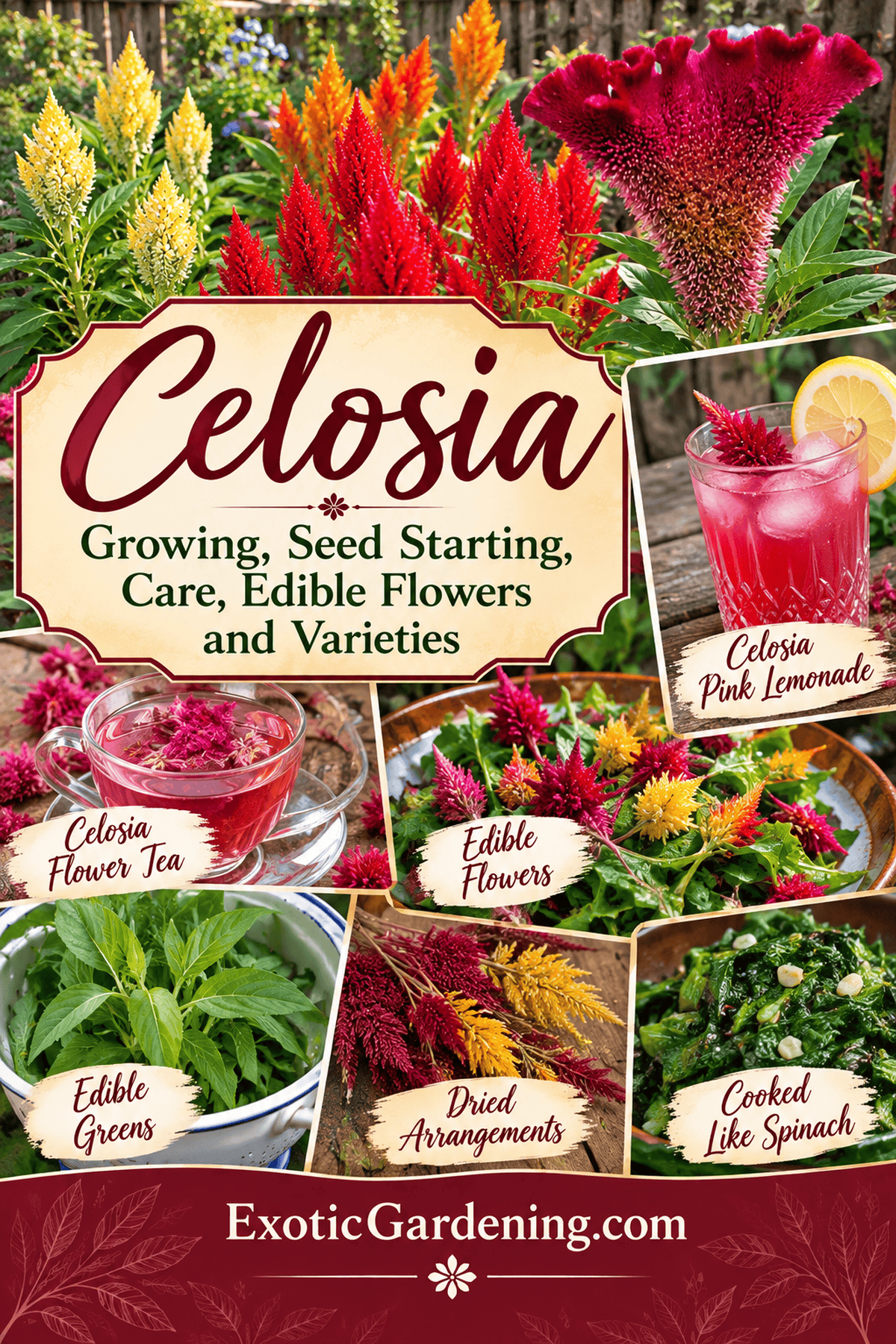
This is where celosia becomes even more fascinating, and where we need to be careful. Beautiful flowers do not automatically mean edible flowers. Not every plant sold as celosia should be treated as a food crop. The best-documented edible species is Celosia argentea, which includes the leafy vegetable commonly called Lagos spinach or soko as well as many familiar ornamental plumed and crested forms.
Some references describe its tender leaves, stems and flower buds as edible, but that does not establish that every named ornamental cultivar, hybrid or other species of Celosia has been separately evaluated for food use. Confirm the botanical identification before harvesting any part for the kitchen.
The Carmine Glow and Red Glow seed packet discussed earlier identifies its plants as Celosia argentea var. plumosa. They belong to a species with documented edible uses, but the packet does not specifically recommend those named selections as food crops.
For dependable edible harvests, choose seed sold for vegetable or edible-flower use and grow it without pesticides unsuitable for food crops. Do not eat flowers from florist arrangements or nursery plants with an unknown treatment history.
Edible Celosia Varieties Offered by Baker Creek
If edible gardening has you curious, Baker Creek Heirloom Seeds is one place to explore varieties described for culinary use. I would start with the actual listing, not just a pretty photograph, and check exactly which plant parts are recommended. Baker Creek offers several celosias with specifically described culinary uses.
Lagos Spinach (Celosia argentea) is sold for its edible leafy greens, which Baker Creek advises cooking rather than eating raw. Chinese Wool Flower (C. argentea) is described as an edible ornamental with tender leaves suitable for cooking. For flower uses, Asian Garden is recommended for colorful teas and drinks, while Orient #2 Dwarf Cockscomb is specifically described as having edible flowers suitable for tea. Red Raven Cockscomb is another selection whose listing mentions edible leaves and blossoms for tea.
These are useful examples of named varieties with documented food uses, not proof that every ornamental celosia cultivar is intended for the table. Read the individual listing and follow food-safe growing and preparation practices.
Can You Eat Celosia Flowers?
Yes, and this is one of those delightful surprises that makes me want to grow more than one kind of celosia. Flowers and tender flower buds from correctly identified, food-safe celosia plants can be eaten, although most traditional vegetable uses of Celosia argentea focus on the young leaves and shoots.
For a colorful garnish, try a small amount of freshly picked, thoroughly rinsed flowers on a salad or another finished dish. Plumed and crested flowers have very different textures, so start with a small taste before adding more.
Harvest only from plants you have grown without chemicals unsuitable for edible crops. Do not use florist arrangements, dyed flowers or ornamentals with an unknown pesticide history, and do not assume that every ornamental cultivar has been evaluated as a food crop. Anyone with plant allergies should be cautious when trying a new edible flower.
Harvesting and Cooking Edible Celosia Greens
If you are growing celosia for the kitchen, don't wait until the plant is tough and mature to discover what the leaves taste like. For a food crop, harvest young, tender leaves and shoots before they become coarse or bitter. Wash thoroughly and cook as you would other leafy greens, using them in soups, sautés or mixed vegetable dishes. Older leaves can become tougher and more bitter.
Harvest moderately so the plant retains enough foliage to continue growing, or grow a separate dense planting specifically for repeated greens harvest. If you are trying edible celosia for the first time, begin with a small serving of a correctly identified food cultivar. The ornamental cut-flower bed and the edible greens bed should be managed separately when pesticide use or cultivar identity differs.
Celosia Seeds as Food: What Gardeners Should Know
Celosia is related to amaranth, and some types produce seeds that have been described as a pseudocereal or grain-like food. However, seed use is not as straightforward as collecting any ornamental seedhead and putting it into the kitchen. Species, variety, processing and culinary traditions matter.
For a reliable food crop, use a seed line explicitly recommended for edible seed production and follow a trustworthy food-use reference. Do not mistake the plant's relationship to grain amaranth for proof that all celosia seeds are suitable or practical as food. For most gardeners, young leaves are the more accessible edible harvest.
Pollinators, Wildlife and Ecological Considerations
Celosia flowers can attract bees, butterflies and other insects, depending on the cultivar and local conditions. A mixed planting with open, accessible flowers from other species will generally provide a broader range of resources than a bed devoted entirely to highly modified crested forms.
Leave a few flowerheads for seed if you want to observe seed-eating wildlife, but be aware that celosia may volunteer where seed falls onto warm, open soil. Remove unwanted seedlings promptly and avoid allowing plants to spread beyond cultivated areas.
Will Celosia Produce Viable Seeds?
Many celosia plants produce viable seed when flowers mature and pollination succeeds. Some open-pollinated crested and wheat types can resemble their parents reasonably well, but seed from hybrids or cross-pollinated plants may vary in flower color, height and shape.
University of Maryland Extension notes that plume types can be particularly variable from saved seed. A plant grown from a named F1 hybrid is not guaranteed to produce offspring identical to the parent. If you want a specific florist cultivar, preserve a reliable seed source or use an appropriate vegetative propagation method where feasible. If you enjoy experimenting, saved seed can produce interesting surprises.
How to Harvest and Save Celosia Seed Step by Step
- Select healthy plants. Choose the flower form, height, stem quality and color you most want to preserve.
- Leave some flowerheads uncut. Allow the tiny flowers to finish blooming and begin developing mature seed.
- Watch for dry seed. Mature seeds are typically small, dark and shiny. Test a section of the head over a paper tray to see whether seed releases readily.
- Collect on a dry day. Cut mature seedheads into a paper bag before wind or rain scatters the seed.
- Dry further if needed. Spread heads in a shaded, ventilated place until completely dry, avoiding mold.
- Thresh gently. Rub or shake dry heads over a tray and separate the small seeds from most of the chaff.
- Label accurately. Include species, cultivar, harvest date and “open-pollinated” if crosses were not controlled.
- Store cool and dry. Place thoroughly dried seeds in labeled envelopes inside an appropriate sealed container away from heat and moisture.
- Test germination. Sow a small sample before relying on an old batch for next year's cutting garden.
Do not harvest immature seed just because the flowerhead has bright color. Allow time for the reproductive structures to mature. If frost threatens, collect nearly mature heads and finish drying them indoors, but understand that very immature seed may not become viable.
Can Celosia Self-Seed in Indiana?
Celosia sometimes self-sows in warm, open garden soil. In a cold climate, the parent plant dies with frost, but viable seed that survives winter may germinate once the ground warms. Whether volunteers appear depends on seed maturity, winter conditions, soil disturbance, mulch and spring weather.
Because the seedlings are tender, early emergence during a warm spell followed by a freeze can eliminate a generation. I would save a labeled envelope of seed even when a plant has reseeded successfully before. If you want volunteers, leave selected seedheads to scatter and avoid covering the entire area with thick mulch. Learn to identify celosia seedlings so you do not weed them out accidentally.
Propagating Celosia from Cuttings
Seed is the standard method, but celosia can also be propagated from stem cuttings in some circumstances. Choose a healthy, nonflowering side shoot, remove lower leaves and place it in a clean, airy propagation medium under warm, humid conditions with bright indirect light. Keep the medium moist without saturating it and watch for new root growth.
Rooted cuttings can be potted individually and acclimated gradually. Success varies with the cultivar and the age of the shoot. For an annual cutting garden, seed is usually simpler and more productive, but cuttings may be useful when preserving an unusual plant temporarily or experimenting with a particular selection.
Can Celosia Be Overwintered?
Celosia is generally treated as a frost-tender annual in Indiana. An outdoor plant will not survive a hard freeze. Some plants may continue growing indoors or in a warm greenhouse if they have sufficient light, root space and pest management, but mature plants can become woody, stressed or less productive.
Rather than trying to preserve an enormous end-of-season plant, I usually recommend saving viable seed or taking cuttings from a valuable selection before cold weather. If you do bring a plant inside, inspect carefully for aphids and mites and do not expect a cool, dim room to keep it flowering vigorously all winter.
Pests, Diseases and Troubleshooting
Damping off: Tiny seedlings can collapse when the medium is saturated or airflow is poor. Use clean containers and careful watering.
Aphids: Colonies can distort young leaves and flowerheads; inspect frequently and control early.
Root rot: Wet, poorly drained soil can damage roots even though the plant likes regular moisture.
Premature flowering: Cold temperatures, rootbound plugs, drought or other stress can cause short plants to bloom before reaching their potential.
Weak, stretched stems: Check light levels, crowding and fertilizer practices.
Fasciated or flattened stems: Some crested forms naturally show unusual growth, and day length can influence the trait.
Root-knot nematodes: Stunted plants with swollen, damaged roots may require a different planting site and sanitation.
Faded flowers: Harvest timing, prolonged exposure and aging can reduce cut-flower quality.
My Recommended Celosia Planting for a Cutting Garden
For a productive small cutting garden, I would combine one dramatic crested variety, a strongly branching plume variety and a slender wheat-type selection. I would leave the largest crested heads unpinched for statement flowers, pinch appropriate plumed plants for more stems, and use wheat types to add movement to arrangements.
I would start the first seedlings indoors in spring, plant only when nights are warm, and sow another small batch a few weeks later. A separate planting of an edible Celosia argentea selection would let me harvest greens without confusing food crops with ornamental plants. And I would reserve a few of the healthiest flowerheads for seed rather than cutting absolutely everything.
Celosia Growing Calendar for Indiana Zone 6a
- January to March: Choose cultivars for flower form, height, cut-flower use and edibility; order seed and plan beds.
- April: Start seeds in warm, bright indoor or greenhouse conditions without letting seedlings become rootbound.
- May: Harden off carefully; wait until frost risk has passed and nights are consistently warm before transplanting.
- June: Establish plants, pinch appropriate varieties, install supports and begin succession sowing if the season allows.
- July and August: Water consistently, feed according to soil needs, harvest fresh flowers and edible greens from suitable crops.
- September: Continue harvesting, dry flowerheads and mark plants selected for seed saving.
- October: Collect mature seed before prolonged wet weather or killing frost; take cuttings from unusual selections if desired.
- November and December: Clean and store saved seed, evaluate which varieties performed best and plan next year's planting.
Frequently Asked Questions About Celosia
How tall can celosia grow?
Height varies enormously by cultivar. Compact bedding types may stay near a foot tall, while vigorous cut-flower strains can reach several feet in suitable conditions. Check the seed supplier's description rather than relying on the general name.
Is celosia a perennial?
Some species are perennial in warm climates, but celosia is normally grown as a frost-tender annual in Indiana.
How long does celosia take to germinate?
Many cultivars germinate in about 8 to 14 days in warm conditions, though seed age and temperature can change the result.
Should I pinch celosia?
Pinch appropriate branching types for multiple stems, but leave a crested plant unpinched if you want one enormous central flowerhead. Follow cultivar-specific advice.
Can I eat celosia?
Some species, particularly food-grown Celosia argentea, have edible young leaves and shoots. Do not eat unidentified or chemically treated ornamental plants.
Will saved celosia seed grow true to type?
Some open-pollinated strains are relatively consistent, but hybrid and cross-pollinated seed may produce variable flowers.
Can I use celosia as a dried flower?
Yes. Crested and plumed types are especially useful when dried quickly in a dark, well-ventilated location.
Is celosia suitable for early winter sowing?
No. Celosia prefers warm germination and is easily stunted by cold. Use indoor seed starting or a late-spring outdoor sowing instead.
Research and Further Reading
For technical guidance on cut-flower production, pinching, spacing, harvesting and drying, see University of Maryland Extension's Production of Celosia as a Cut Flower, Cornell University's high-tunnel celosia guidance and Mississippi State University Extension's farmer-florist guide.
For botanical and edible-use information, consult North Carolina State Extension's Celosia profile.



Leave a Reply