Your USDA hardiness zone is one of the most useful numbers to know about your garden - but it is also one of the easiest to misunderstand. It helps you compare winter cold with the cold tolerance of perennial plants, trees and shrubs. It does not tell you everything that will grow where you live, and it is not a planting calendar. Once you understand both what the zone means and what it leaves out, it becomes a starting point for choosing plants, winter sowing, overwintering tender plants, using microclimates, extending the season and even carefully pushing the limits of what you can grow.

I first offered an interactive USDA Hardiness Zone Finder years ago alongside my other gardening tools. I am restoring that idea here, but I do not want an old tool giving gardeners old information. This resource now points gardeners to the current 2023 USDA Plant Hardiness Zone Map and its ZIP-code finder while preserving the history of the original Exotic Gardening tool.
Find Your USDA Plant Hardiness Zone
Use the official USDA 2023 Plant Hardiness Zone Map to enter your ZIP code or explore the interactive map. Once you have your zone, come back here and I will help you understand what that number actually means for the plants you want to grow.
Current source: USDA Plant Hardiness Zone Map, 2023, Agricultural Research Service, U.S. Department of Agriculture.
About The USDA Hardiness Zone Map
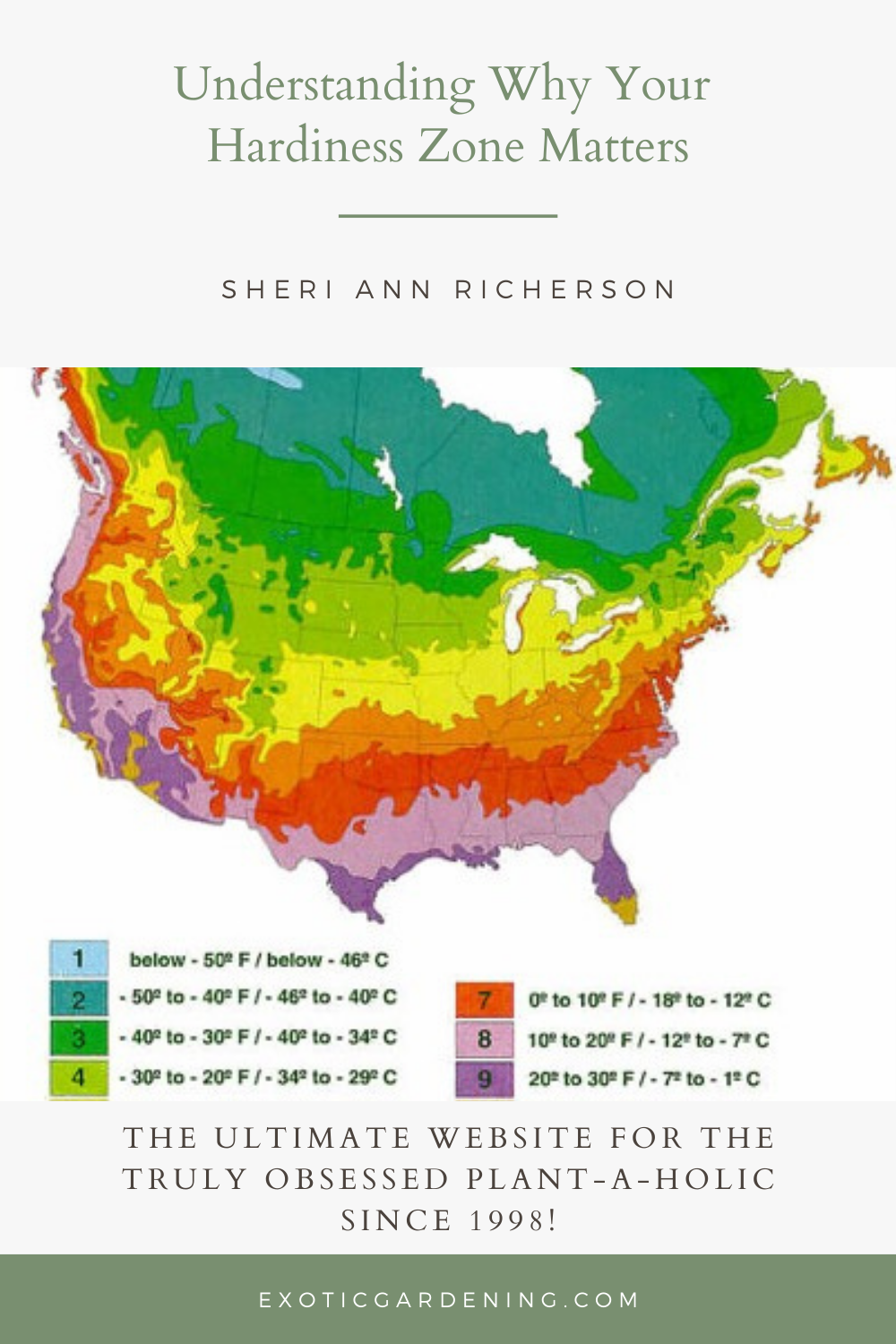
The USDA Plant Hardiness Zone Map covers the United States and its territories and divides locations into 13 zones based on average annual extreme minimum winter temperature. Each full zone spans 10 degrees Fahrenheit and is divided into two 5-degree half-zones, such as 6a and 6b.
That distinction matters. Your hardiness zone is not your average winter temperature, your record-low temperature, your frost date or a complete description of your climate. It is a useful shorthand for the average coldest winter conditions perennial plants are likely to experience in your area.
The current USDA Plant Hardiness Zone Map was released in 2023 and is based on 30 years of weather data from 1991 through 2020. It uses the average annual extreme minimum winter temperature at a location, with 13 zones divided into 10-degree Fahrenheit bands and 5-degree half-zones designated a and b. This is a much newer and more detailed map than the one that was available when I first created this resource.
What Changed With The 2023 USDA Map?
The 2023 map uses weather observations from 1991 through 2020 and data from 13,412 weather stations. The previous 2012 map used 7,983 stations. USDA reports that roughly half of the country shifted into the next warmer 5-degree half-zone while roughly half remained in the same half-zone.
That does not mean every gardener's location changed, and USDA specifically cautions against treating a change in hardiness-zone designation as a stand-alone measurement of climate change. The newer observation period, additional weather stations and improved mapping methods can all affect zone boundaries.
If you have been gardening for years and remember being in a different zone, check your location against the 2023 map rather than relying on the zone you memorized years ago.
Know What to Plant
To make sense of a perennial plant's hardiness rating, you first need to know your USDA hardiness zone. The zone gives you a useful starting point for judging whether a perennial, shrub or tree is likely to tolerate the average extreme winter cold where you garden. It is not, however, a list of the only plants you are allowed to grow.
Use the zone map together with the plant's hardiness range to judge whether it is likely to behave as a perennial in your garden. Read that range from coldest to warmest, but remember that winter survival is only one part of successful growing. Summer heat, humidity, soil drainage, moisture, wind and the plant's own cultural requirements still matter.
For example, if I am looking at a plant that is hardy in Zone 5 through Zone 10, considering the fact that I live in Zone 5, the plant is hardy to my area.
If your zone falls between the range stated for the plant, then the plant is hardy for your area.
So this particular plant is also hardy or can be a perennial in zones 5, 6, 7, 8, 9, and 10.
If a particular plant says that it is hardy down to Zone 5, then it will should be hardy to a warmer climate, however some plants simply do not thrive in warmer conditions.
If your zone is lower than the zone listed on your plant info, then that particular plant, tree, or shrub will not be hardy to your zone, and you will need to treat this plant as an annual.
For example, I am in Zone 5, if a plant says that it is hardy to Zones 9 - 11 that means that I will have to treat this plant as an annual here in Zone 5.
Once you know your zone, it becomes much easier to determine if a plant will be perennial and survive winters in your area.

Is it a perennial I expect to survive outdoors, or can I grow it as an annual? Can I overwinter it indoors, in a protected structure or as a dormant bulb, tuber or cutting? Do I have a warmer microclimate where it might succeed? Am I willing to protect it during unusual cold? The answer may still be no - but now it is an informed gardening decision instead of a number making the decision for you.
What Your Hardiness Zone Does Not Tell You
This is where hardiness zones are useful but also easy to overuse. A zone can help you judge winter cold tolerance, especially for perennial plants, trees and shrubs. It does not tell you your first or last frost date, the length of your growing season, summer heat, humidity, rainfall, soil drainage, snow cover, wind exposure or how much sun a particular corner of your garden receives.
Two gardens in the same USDA zone can behave very differently. A protected south-facing spot beside a masonry wall can hold heat differently from an exposed low area where cold air settles. Wind, elevation, buildings, pavement and surrounding vegetation can create small microclimates within the same property. This is one reason I treat the USDA zone as a starting point rather than the final word on whether I am willing to experiment with a plant.
This distinction becomes especially important when you are planning vegetables and flowers from seed. Your USDA zone does not tell you when to start tomatoes indoors, when your last spring frost will occur, how many frost-free days you have, or whether a cool-season crop will tolerate your summer heat. Those decisions require other pieces of the gardening puzzle. The zone is primarily a cold-hardiness tool for perennial survival—not a complete planting calendar.
One of the most useful things you can do is keep your own garden records. Notice where snow lingers, where it melts first, which bed frosts first in fall, where spring growth begins earliest, which areas stay wet and where winter wind hits hardest. Over time, those observations tell you things no national map can show at the scale of your individual garden.
How USDA Hardiness Zones Work
Hardiness ratings are easiest to apply to established perennial plants growing in the ground, where roots have the buffering effect of surrounding soil. Containers, raised situations and protected structures create different conditions, so I do not assume the map predicts them perfectly.
The map also does not account for the protected environment you create with season-extending greenhouses, cold frames, row covers or low tunnels. I have long experimented with using protection to grow beyond what an exposed garden would allow, but I now think it is clearer to describe that as modifying the plant's immediate environment rather than literally changing the USDA zone of the property. The amount of protection varies with the structure, covering, wind, sunlight, snow and whether supplemental heat is used.
In my own earlier gardening notes I sometimes described a plastic-covered cold frame as effectively gaining zones. The more accurate way to use that observation is this: protection can substantially change the temperature plants experience, but the result is not a fixed two-zone conversion. A cold frame that protects a plant during one weather pattern may perform very differently during prolonged cloud cover, wind or an unusually severe cold snap.
Raised beds and pots will also be cooler than the ground and are more likely to freeze, so I also take this into consideration.
Plants are less hardy in a container or raised bed than they would be in the ground.
If you are planting in any kind of raised bed or container, you will need to decide upon a plant that is hardy to at least two zones less than the zone you live in.
For example, I live in Zone 5, but if I was doing my planting in pots outside, I would need to select plants that are hardy to Zone 3 and under.
If you are moving towards a more sustainable, lower maintenance, perennial garden it is imperative that you know your zone, the zone tolerance of the plant, understand how the USDA hardiness zones work, and plan accordingly to these details.
Hardiness Zones, Containers And Protected Growing
The number on the USDA map is not a fence around your garden. It tells you something very specific: the average annual extreme minimum winter temperature for your location. That is tremendously useful when choosing perennial plants, but it does not tell you that everything outside your listed zone is automatically off limits. In fact, learning how to work with microclimates, protection and season-extension techniques is where gardening gets especially interesting.
Think of your zone as the baseline conditions you are starting with. From there, you can decide whether you want the reliability of plants comfortably hardy in your zone, whether you want to experiment near the edge of their hardiness range, or whether you are willing to create the conditions a less-hardy plant needs.
A hardiness rating is most straightforward when a perennial is growing in the ground. Containers expose roots to colder air from the sides as well as the top, and freeze-thaw cycles can be much harder on roots than conditions in surrounding garden soil. That is why I give container-grown perennials an extra margin of winter protection instead of assuming the plant tag's zone rating guarantees survival in a pot.
Protected growing changes the situation again. Cold frames, greenhouses, row covers and other season-extending structures can create warmer conditions around plants, but I do not treat them as permanently changing the USDA zone assigned to my property. Their actual protection depends on the structure, covering, sunlight, wind, supplemental heat and the weather event itself. What they can do is give a gardener another tool for pushing the limits of what can be grown.
What Can You Actually Do With Your Zone?
Knowing your zone should open possibilities, not close them. Once you know how cold your winters normally get, you can choose techniques that work with those conditions instead of simply reading a plant tag and stopping there.
Winter Sow Seeds Outdoors
Cold winters can be useful. Many perennial and native seeds benefit from a period of cold, moist conditions before they germinate. Winter sowing lets you place suitable seeds outdoors in protected containers and allow natural winter temperature changes to help break dormancy. When conditions become favorable in spring, the seeds germinate on their own timetable. This is one way gardeners can make winter itself part of the seed-starting system instead of treating cold weather only as an obstacle.
Use Microclimates Already In Your Yard
Your property may contain several miniature climates even though the USDA gives the entire location one zone designation. A sheltered area near a south-facing wall may stay warmer than an exposed bed. A low spot may collect cold air and frost sooner. Pavement, masonry, windbreaks, slopes, buildings and tree cover can all influence what happens around an individual plant. Pay attention to where snow melts first, where frost appears first and last, and which areas escape wind. Those observations become a practical map of your own garden.
Give Borderline Plants A Better Chance
If you want to try a perennial at the edge of its recommended range, placement matters. Good drainage, protection from winter wind, mulch applied at the appropriate time, snow cover, planting near a protected structure and choosing the warmest suitable microclimate can make a difference. There is still risk: USDA specifically notes that an unusually severe cold event can kill a plant that survived several previous winters. Zone pushing is experimentation, not a guarantee.
Extend The Season Instead Of Changing The Zone
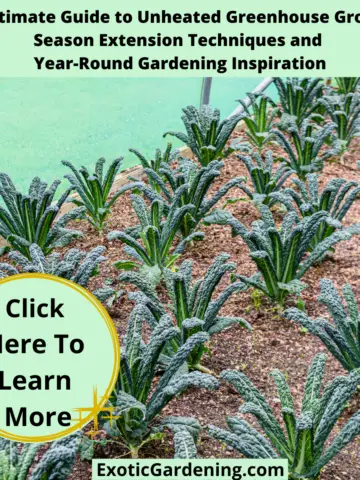
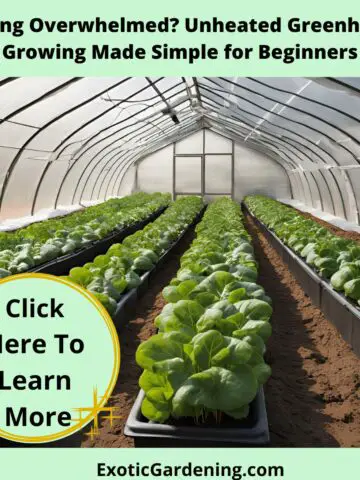
Cold frames, row covers, low tunnels, high tunnels and greenhouses can protect plants and extend the period in which you can grow them. I think it is more useful to think of these structures as changing the plant's immediate growing environment rather than literally changing the USDA zone of your property. How much protection you get depends on the structure, materials, sunlight, wind, weather and whether supplemental heat is involved.
Grow Tender Plants As Annuals Or Overwinter Them
A plant does not have to survive outdoors all winter to earn a place in your garden. You can grow tropicals and other tender plants during the warm season, take cuttings, save seed when appropriate, lift bulbs or tubers, move container plants into protected storage, or maintain selected plants indoors until warm weather returns. That turns a hardiness limitation into a management decision.
A Practical Zone-Pushing Strategy
If you want to grow something that is not reliably hardy where you live, start by deciding what kind of experiment you are actually making. There is a big difference between trying a perennial one half-zone beyond its rating in a protected bed and trying to overwinter a tropical plant outdoors through a freezing winter. The farther you move from the plant's normal cold tolerance, the more intervention - and the greater risk -you should expect.
I like to think in layers. First use the warmest suitable microclimate you already have. Then improve drainage and site conditions, because a marginal plant entering winter stressed or waterlogged has a harder job. Add appropriate mulch or wind protection when the plant benefits from it. For plants that need more help, move to cold frames, tunnels, greenhouses, containers that can be relocated, dormant storage, cuttings or indoor overwintering. You do not have to use every technique; you choose the amount of work that makes sense for the plant and for you.
And keep a backup when the plant matters to you. Saving seed, taking cuttings, dividing a plant or keeping one protected specimen can turn a zone-pushing failure from a total loss into useful information for the next experiment. That is part of the fun of experimental gardening: observe, record, adjust and try again.
Yes, You Can Fool Mother Nature
It is possible to keep many plants growing year-round - or simply keep them alive until spring—in climates where they could not survive an exposed winter. What that takes depends on the plant. Light, temperature, water, dormancy requirements, humidity and air movement can all matter, and actively growing plants may need different care from plants being held dormant.
Gardeners have been doing this for many years, especially with vegetables and once you learn how to accomplish this you will be surprised at what you can grow under cover, year round or simply keep alive during the winter months in the ground.
Creating an artificial environment that plants will thrive in is not hard.
A simple structure covered in clear plastic can raise the growing temperature inside of it enough to grow plants year round that might otherwise perish if they were left exposed to Mother Nature’s elements.
Fooling Mother Nature is easy, it can be done with virtually any plant and a covered garden structure such as a cold frame or greenhouse.
The question you need to answer is how far are you willing to go to be able to grow what you want to grow year round.
There is absolutely nothing wrong with choosing plants that are comfortably hardy where you live, especially when reliability and low maintenance are the goal. But your zone should never make you feel as if those are the only plants you are allowed to grow. Once you understand what the number measures, you can make informed choices about annual growing, overwintering, winter sowing, protected culture, season extension and carefully pushing the limits in the microclimates around your own garden.

Keep Planning Your Garden
Your hardiness zone is one piece of the puzzle. Once you know it, use the rest of the Exotic Gardening seed and planning resources to decide what to grow, how much to plant and how to get those seeds started.
Calculate How Many Seeds You Need →
Visit the Seed Starting & Seed Saving Center →


Leave a Reply