Disclosure: I received a steadyGROW seed starter sample kit and a Complete Vegetable Garden Kit from the Dollar Seed free of charge. All opinions are my own.
With the fish finally settled into their new home, I was ready for the part of aquaponics that interested me most - seeing what I could actually grow. It would have been easy to start with lettuce. Leafy greens are often recommended for aquaponics, and for good reason. But I already grow lettuce and other cool-weather crops outdoors throughout the year. If I was going to put a fish tank and growing system to work inside my house, I wanted to try something that would make the experiment interesting: pole beans, tomatoes and cucumbers.
Those are not necessarily the easiest plants to grow in a small indoor aquaponics setup. They can become large, hungry plants, and fruiting crops demand more from the system than a few leaves of lettuce. That was exactly why I wanted to try them. Gardening has always been about paying attention, trying things for myself and learning from what happens. Starting the seeds was the first step, but I was already thinking ahead to how the roots would grow, how the plants would be supported and whether the fish and plants could stay in balance.
Choosing Seeds for My Aquaponics Experiment
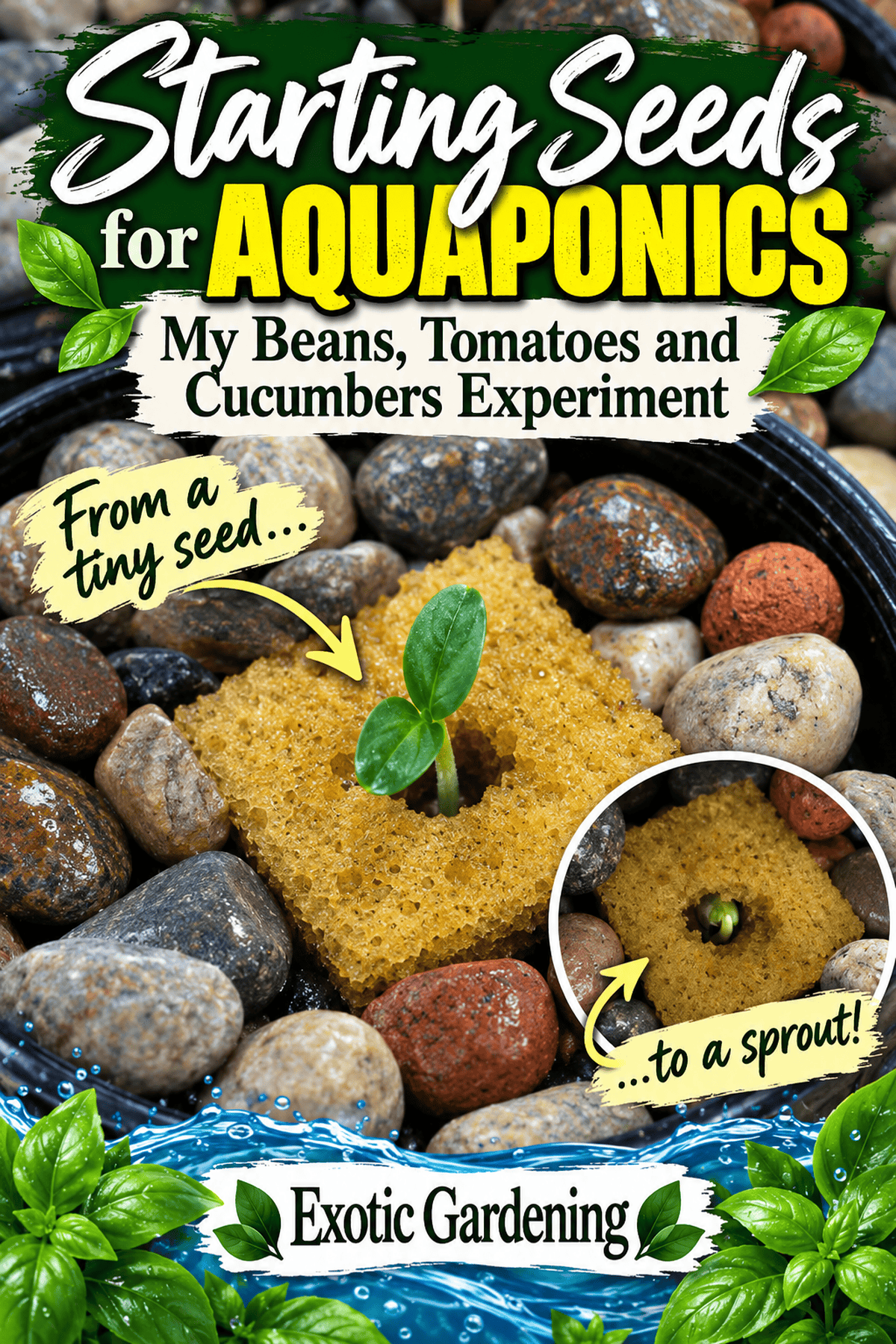
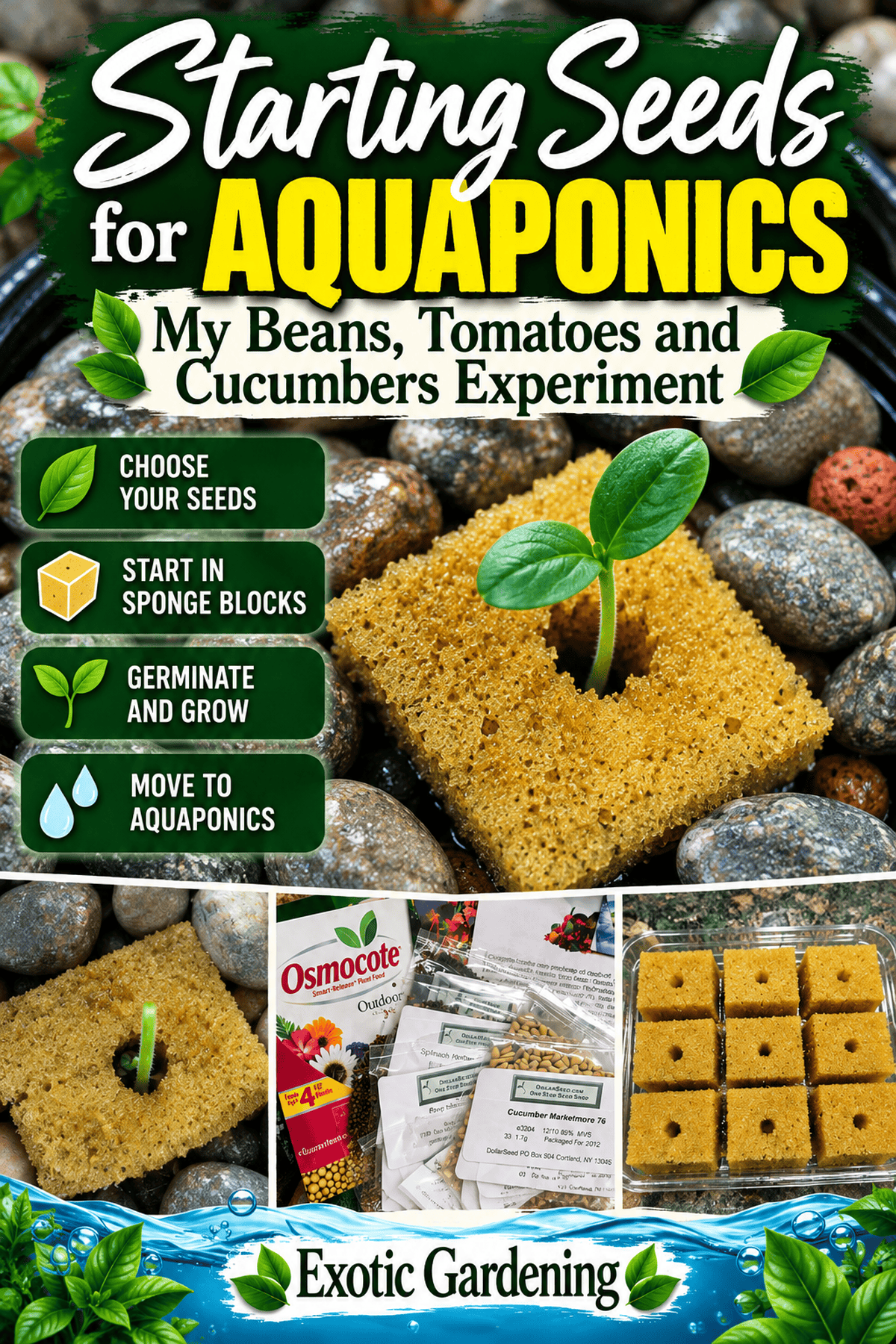
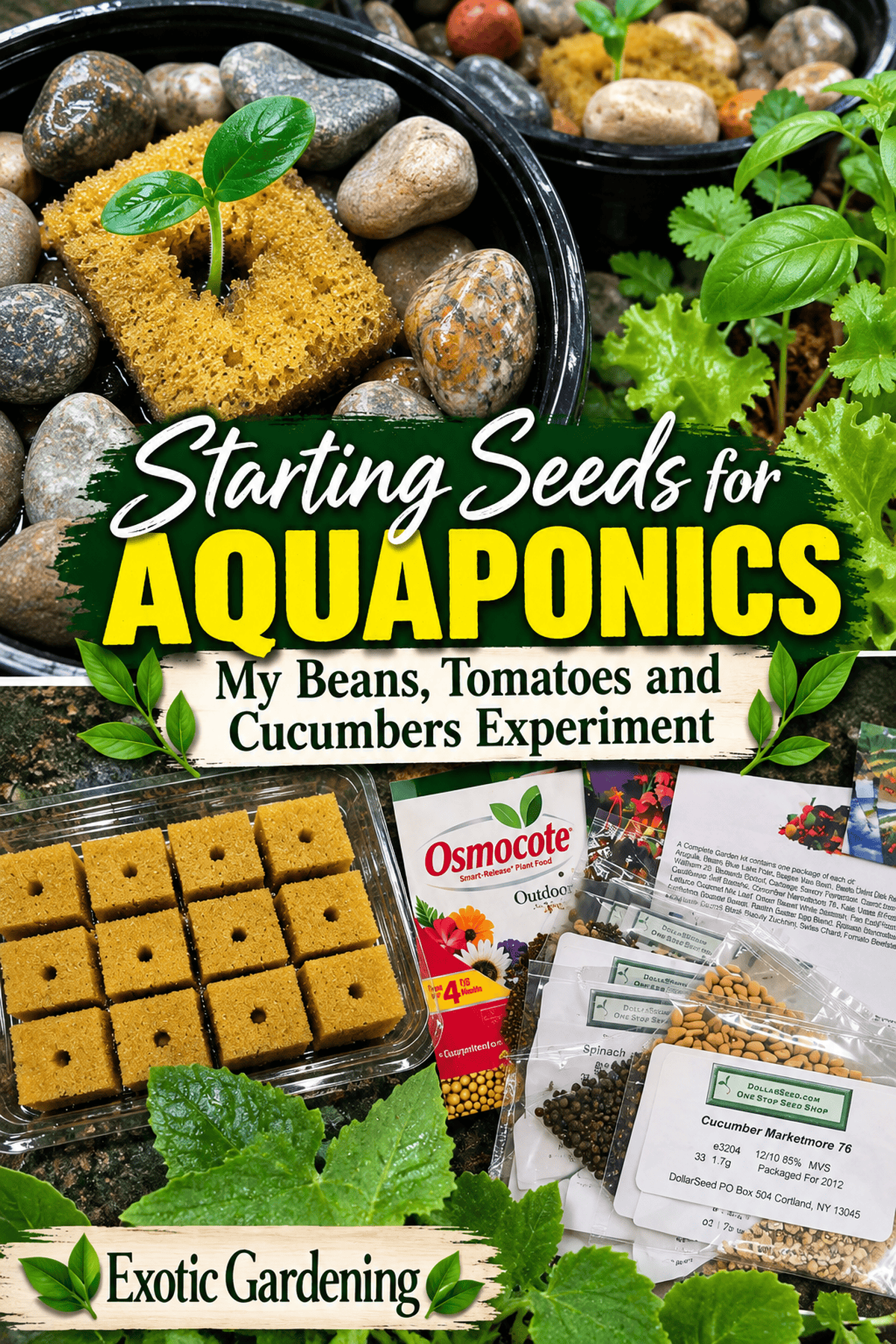
I had recently received a Complete Vegetable Garden Kit from the Dollar Seed, so I chose my pole bean, tomato and cucumber seeds from those packets. I knew the seed was fresh, and there was enough left to plant another round if the first attempt did not go as planned. I started eight pole bean seeds, two tomato seeds and two cucumber seeds. That gave me twelve seeds to watch without filling the entire indoor growing area before I knew what the system could support.
There is a difference between choosing plants that will germinate and choosing plants that will thrive in a particular aquaponics system. Beans and cucumbers grow quickly and may need supports sooner than expected. Tomatoes can become enormous, and a plant that looks manageable as a seedling can eventually need considerable space, light and nutrients.
If you are starting your own system, think about the mature size of the plants before deciding how many seeds to sow. It is easier to start with a few and add more later than to untangle a crowded bed of roots and vines.
Why I Used Soil-Free Seed Starting Blocks
For this experiment, I used the steadyGROW seed starter sample kit I had received earlier in the year. The growing medium matters in aquaponics because the plants will eventually share a water-circulating system with the fish. Ordinary potting soil can wash out of a container, cloud the water and introduce fine particles that may collect in plumbing or pumps. A suitable soil-free starter gives young roots somewhere to establish themselves without bringing loose garden soil into the system.
I planted the seeds in the starter blocks with the intention of cutting the blocks apart after germination and moving each seedling into the pebbles in the growing bed. That way I could handle each young plant individually while disturbing its roots as little as possible.
The important thing is to keep the seed-starting material appropriately moist and well aerated, rather than letting the seeds dry out or leaving them sitting in stagnant water. Follow the directions for the particular starter medium you use, since different products absorb and hold moisture differently.
How to Start Seeds for an Aquaponics System
Before planting, decide where the seedlings will go once they are large enough to transplant. Have clean, suitable growing media ready, along with enough space and light for the crops you selected. A seed tray may hold a dozen seedlings comfortably, but that does not mean the mature plants will fit into the same grow bed. In my case, the eight beans, two tomatoes and two cucumbers were an experiment, not a promise that all twelve plants would remain in the system to maturity.
- Choose crops with the finished system in mind. Consider the mature plant size, the need for trellising or staking, and whether your setup can provide enough light for flowering and fruiting.
- Prepare a clean, soil-free seed-starting medium. Moisten it according to the manufacturer's instructions. Avoid adding loose potting soil to a recirculating aquaponics system.
- Sow the seeds at the depth recommended on their packets. Label the varieties so you can track germination and compare how each crop performs.
- Provide the conditions each crop needs to germinate. Keep the medium evenly moist, not waterlogged, and give seedlings adequate light as soon as they emerge.
- Watch root development before transplanting. Once the seedlings are sturdy enough to handle and roots have begun to establish, transfer them carefully into the prepared growing bed without burying the stems too deeply.
- Introduce plants gradually and observe the system. Keep an eye on fish behavior, water circulation and water test results instead of assuming that more plants automatically make the system healthier.
Keeping Fish and Plants in Balance
One reason I started with a limited number of seeds was that I wanted to see how the system responded. I planned to monitor pH, ammonia and nitrates as the plants grew, and to use those observations to help decide whether the system could support more plants. Nitrite is another important test in a fish-based system, especially while the biological filter is becoming established. The bacteria that convert fish waste into plant-available nutrients are every bit as important as the fish and the vegetables.
Adding fish or plants should never be a quick fix based on a single reading. Fish need safe water first, and a system with detectable toxic ammonia or nitrite may need attention to feeding, filtration, aeration or biological cycling rather than a larger fish population. Fruiting vegetables also require adequate light and nutrients, and fish waste alone does not guarantee that every nutrient will be present in the right amount. Test regularly, make changes carefully and record what you see. Those notes can tell you much more than trying to guess what went wrong after a plant begins to struggle.
What Happens After the Seeds Sprout?
Getting a seed to germinate is exciting, but it is only the beginning. A seedling living on the food stored inside its seed is not the same thing as a plant that has established a healthy root system and begun taking up nutrients from the aquaponics water. I watch for the first true leaves, roots beginning to explore the sponge, and steady new growth. The first two leaves on many seedlings are seed leaves, or cotyledons. The next leaves begin to look like the mature plant, and that is a useful sign that the seedling is moving beyond the earliest stage.
Do not feel that you must transplant the instant you see a little green. A tiny sprout can be damaged by rough handling, especially when the root has barely emerged. On the other hand, leaving a vigorous bean or cucumber crowded in a small starter block for too long can create tangled roots. I would rather watch the plant itself than rely on an arbitrary number of days printed on a calendar. Keep the block moist, provide adequate light, and move it when the young plant is sturdy enough to handle and its roots are beginning to develop.
How I Move Sponge-Grown Seedlings Into Pebbles
My plan with the steadyGROW blocks was simple: start the seeds in a clean, soil-free medium, then separate the blocks and settle the seedlings into the pebble growing bed. Before moving anything, check that the aquaponics system is functioning properly and that the water is safe for the fish. Rinse new growing media as appropriate for that product, and make sure there is room for each plant's mature root system and top growth. A small seedling does not stay small for very long when it is happy.
- Check the seedling. Look for healthy color, new leaf growth, and roots that are developing without turning slimy or breaking down.
- Separate the blocks gently. If the sponge pieces are joined, cut the material apart rather than pulling on stems or roots. Keep the original sponge around the roots unless the product instructions say otherwise.
- Make a space in the pebbles. Move the pebbles aside, set the sponge into place, and support it without crushing the stem. The crown and leaves should remain above standing water.
- Keep moisture available to the roots. A new transplant with short roots may not yet reach the wet zone of a flood-and-drain bed. Check the water level and wetting cycle so the sponge does not dry out while roots establish.
- Watch the plant for several days. Some temporary drooping can follow transplanting, but persistent wilting, a soft stem, or browning roots mean something needs attention.
There is a temptation to bury a struggling seedling deeper or pour more water over it, but those are not universal solutions. First check whether the root zone is drying out, staying waterlogged, receiving enough oxygen, or being exposed to too much heat. Aquaponics depends on water movement and oxygen as much as it depends on moisture.
What Beans, Tomatoes and Cucumbers Need as They Grow
I deliberately chose more than one kind of vegetable because each one tells me something different. Pole beans can climb quickly and need a trellis before the vines begin wrapping around whatever happens to be nearby. Cucumbers also need room, support, and good air circulation. Tomatoes can become substantial plants, and once they begin flowering and setting fruit, their nutritional needs are different from those of a small leafy green. In a compact system, it is easy to underestimate just how much space these crops will claim.
Good lighting is essential. A seedling that stretches toward a distant window may become thin and weak, regardless of how carefully its roots are tended. Give seedlings appropriate, even light, keep air moving gently around the leaves, and avoid crowding plants together. As they grow, provide supports that do not put weight on fragile stems or interfere with access to the fish tank and plumbing. If a plant starts shading its neighbors or overwhelms the available root space, it is better to thin or relocate it than let the whole system suffer.
Fruiting plants also deserve realistic expectations. A small, newly established fish-and-plant system may not supply enough available nutrients to carry several large tomatoes, cucumbers, and beans through a heavy harvest. That does not mean the experiment has failed. It means you have learned something important about matching the number and type of plants to the system you actually have. I would rather grow a few healthy plants and understand why they are thriving than pack a bed full and wonder why everything stalls.
Troubleshooting Seed Starting in Aquaponics
Seeds do not germinate: Check the seed packet for expected temperature and germination time, then inspect the starter block. Seeds need moisture and oxygen, not constant submersion. Old seed, a block that dried out, and an overly cold or hot location can all interfere with germination. Do not assume that adding fish nutrients will make a dormant seed sprout faster.
Seedlings are tall, pale, or leaning: The first thing I check is light. Increase suitable light intensity or improve its position without overheating the foliage. Give seedlings enough room so they are not competing for every bit of brightness.
Leaves turn yellow: Look at the whole picture before reaching for a nutrient bottle. Light, root health, temperature, water pH, and nutrient availability can all affect leaf color. Some nutrient supplements can harm fish or the biological filter, so only use products and doses known to be appropriate for aquaponics.
Roots turn brown or smell unpleasant: Examine oxygenation, water movement, and temperature. A healthy root system may vary in color depending on the medium and water, but sliminess, decay, and a foul odor deserve immediate investigation. Remove obviously decaying material carefully and address the underlying condition rather than simply replacing the plant.
Fish seem stressed: Stop treating this as only a plant problem. Check dissolved oxygen where possible, temperature, pH, ammonia, and nitrite. Reduce feeding when appropriate and take fish-safe corrective steps based on actual test results. Fish welfare comes before trying to push more growth from a seedling.
How to Keep Useful Records of Your Own Experiment
One of the most helpful things you can do is write down what you planted and when. Label the bean, tomato, and cucumber blocks so you do not have to guess which seedling is which. Record sowing dates, the first visible sprouts, the appearance of true leaves, and the date each plant moves into the growing bed. I also like the idea of photographing the same plants regularly. A photo taken every few days reveals changes that are easy to miss when you see a plant constantly.
Keep a separate record of the system's water temperature, pH, ammonia, nitrite, and nitrate readings, along with any changes to feeding, lighting, or water circulation. You do not need an elaborate laboratory notebook to learn from your garden. A simple dated list can show whether a problem began after a change and help you avoid repeating the same mistake. When you are experimenting with living fish and growing plants, those observations are far more valuable than guessing.
What This Experiment Can Teach a Beginning Aquaponics Gardener
If you are new to aquaponics, please do not think you have to start with tomatoes, cucumbers, and pole beans just because those are the seeds I wanted to try. Lettuce and many leafy greens are often more forgiving choices for a modest, established system. My choices reflected my curiosity and the seeds I had on hand, not a promise that every crop would thrive in every tank. Start with what your system can reasonably support, learn how its water chemistry behaves, and build from there.
That is what I love about growing things. Every seed holds possibility, but the real satisfaction comes from paying attention, learning to recognize what a plant needs, and making small changes that help it succeed. Whether your first aquaponics crop is lettuce or a cucumber vine that wants to take over the room, you are learning skills that will serve you in every garden you grow.
What I Was Watching for Next
After sowing the seeds, I was eager to see which ones would germinate first and how their roots would develop in the starter blocks. My next step was to separate the blocks and transplant the seedlings into pebbles, where I hoped they would continue growing, eventually flowering and producing vegetables. At this stage, that was the plan - not a harvest result. I did not know yet which crops would be happiest in the system or whether the number of plants I started would turn out to be practical.
That uncertainty is part of what makes aquaponics fascinating to me. There is a living relationship between the fish, the water, the bacteria and the plants, and you cannot understand it simply by setting everything up and walking away. You have to watch. You have to test. Sometimes you have to change your plans. If you are thinking about starting seeds for your own aquaponics system, begin with crops you genuinely want to grow, give them the right conditions and let what happens in your particular setup guide the next step.
Continue your growing journey: Read about how our aquaponics journey began, our 29-gallon aquaponics tank, explore hydroponic vegetable gardening and see my indoor seed starting setup. You can also browse the Seed Starting & Seed Saving hub for more growing advice.