There is something almost magical about growing a plant from seed, especially when it is something unusual that you are unlikely to find at your local garden center. That is exactly what drew me to Albuca shawii. With its cheerful yellow flowers and delicate, slightly unusual appearance, this South African bulb is the kind of plant that makes me want to experiment and see what I can grow.
Watching those first green shoots appear is still one of my favorite parts of gardening. A packet of seeds gives me the chance to follow a plant from its very beginning, learning its habits as it develops instead of meeting it only after it is mature and flowering. With Albuca shawii, that journey began with a small peat pot and a layer of vermiculite here in Indiana.
If you are curious about growing Albuca shawii, I want to share what you need to know about starting seeds, caring for the bulbs, encouraging flowers, propagating established plants and collecting viable seeds for future growing seasons.
Meet Albuca shawii
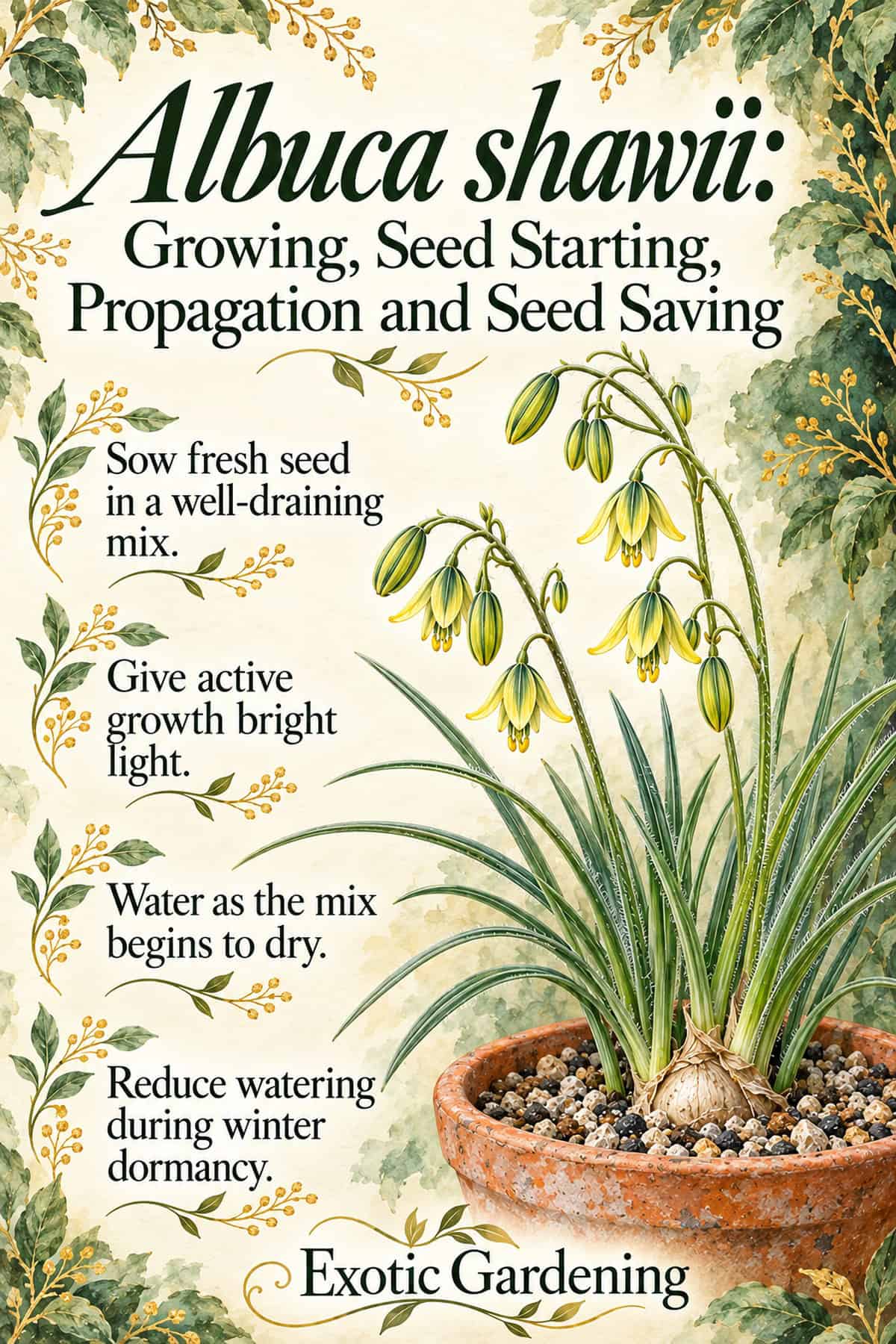
Albuca shawii is a small South African bulbous plant valued for its narrow, slightly sticky leaves and nodding yellow flowers marked with green. The foliage has been described as anise-scented when crushed, although scent varies and there is no reason to damage a healthy plant just to test it. Plants commonly reach about 12 inches (30 cm), making them suitable for pots, troughs and close-up collections of unusual bulbs. The species is also listed under the synonym Albuca trichophylla. Unlike the familiar corkscrew-leaved Albuca spiralis, which often grows during the cooler months, A. shawii is generally a summer-growing species that rests during winter. That difference is essential when deciding when to water and sow seed.
My Albuca shawii Seed-Starting Notes
On October 26, 2004, I laid Albuca shawii seed on top of vermiculite in a peat pot. The seeds germinated on November 1, 2004, just six days later. I keep those dates because firsthand records are useful: they tell me exactly what happened in my own growing setup. They are not a promise that every seed lot will germinate in six days. Freshness, temperature, light, moisture and the plant's seasonal rhythm all affect results. Since that sowing took place in autumn, I would also watch the young plants carefully under lights and adjust their care to the growth they actually show, rather than assume that every Albuca follows the same calendar.
Light, Soil and Containers
Choose a pot with drainage holes and a gritty, fast-draining growing medium. A practical starting mixture is quality potting medium amended generously with pumice, coarse perlite or another horticultural mineral component. Avoid dense garden soil or a water-retentive container without drainage. Set the bulb with its growing point near the surface, rather than burying it deeply; established growers report that A. shawii bulbs often sit close to the soil surface. Give actively growing plants very bright light and, after acclimation, several hours of sun. In an Indiana summer, watch containers during intense afternoon heat, particularly if they were previously grown under lights. Gradually increase exposure to avoid scorching tender foliage. A sheltered porch or bright greenhouse bench may be useful, but never allow a pot to stand in a saucer of water.
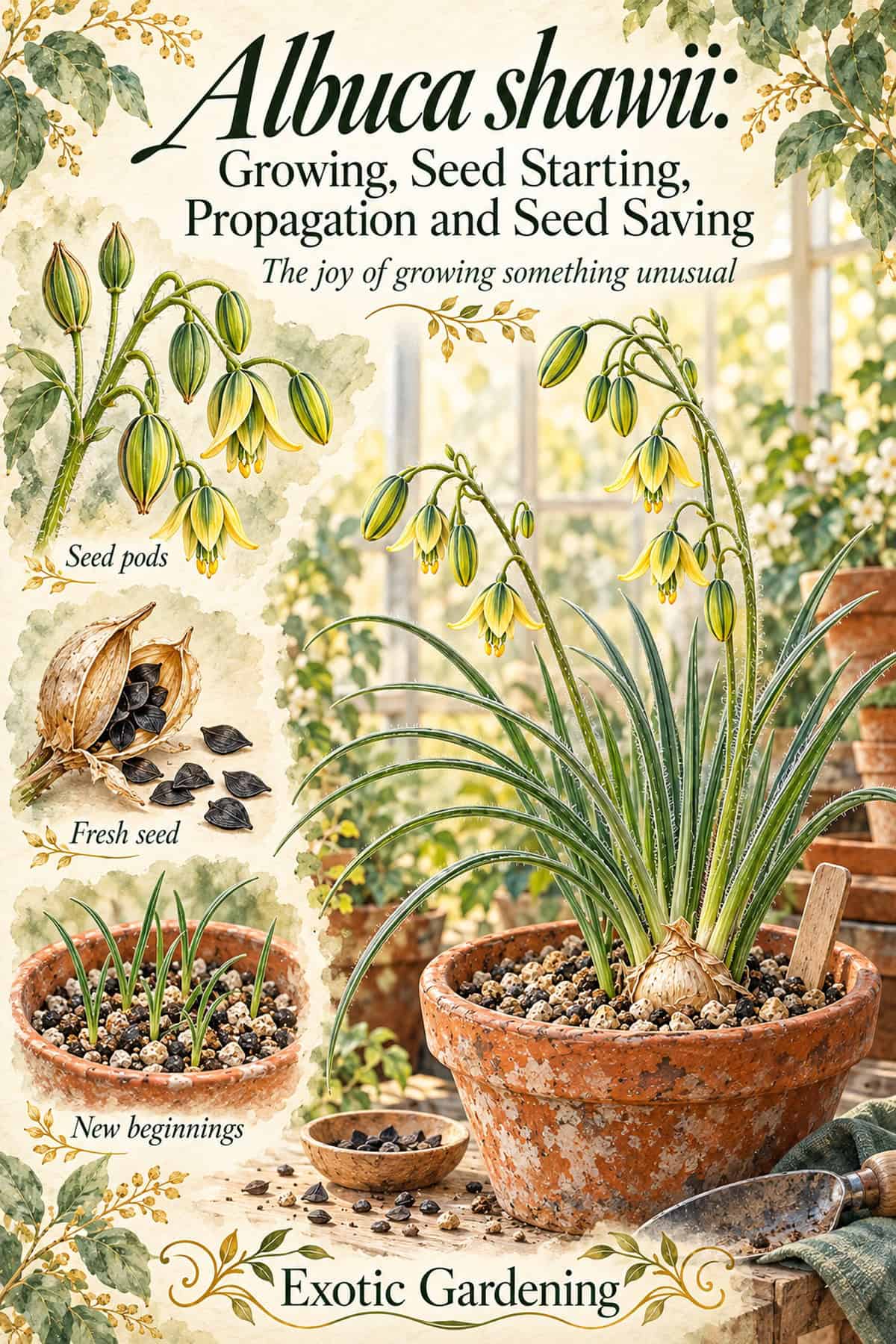
How to Start Albuca shawii from Seed Step by Step
- Find fresh, correctly labeled seed. Seed of many Albuca species loses viability in storage, so ask when it was harvested and sow it promptly when practical.
- Choose the right season. Because A. shawii is generally a summer grower, aim to establish seedlings as days lengthen and warmth increases, or provide suitable indoor conditions if sowing at another time.
- Prepare a clean container. Fill a shallow pot or individual cells with a free-draining seed mix and moisten it before sowing.
- Sow lightly. Space the seeds over the surface and press them into contact with the mix. My original trial used surface-sown seed on vermiculite. A very thin covering of fine grit can help stabilize the surface, but avoid burying the seed deeply.
- Maintain gentle moisture. Keep the surface consistently lightly moist during germination, never saturated. Use a fine mist or bottom watering and drain excess water.
- Provide bright light and moderate warmth. A bright, protected location helps emerging seedlings stay compact. Avoid extreme heat and stagnant, humid conditions.
- Label and record. Note the sowing date, seed source and first emergence. Allow extra time for slower seeds before discarding a pot.
- Grow seedlings on carefully. Once established, let the surface begin to dry slightly between waterings without desiccating tiny roots. Protect seedlings from slugs and damping-off conditions.
Young bulbs can be surprisingly small. Resist the urge to separate them immediately. Let them build strength through at least a full growing cycle, and repot during a suitable resting period when roots are least likely to be damaged.
Watering, Feeding and Seasonal Dormancy
During active growth, water thoroughly and allow the mix to drain, then water again as the upper layer begins to dry. In a small, gritty pot during summer, this may mean more frequent attention than a typical houseplant needs. Feed lightly with a balanced fertilizer at a diluted rate while leaves are actively growing; do not push dormant bulbs with fertilizer. As the leaves naturally yellow and growth stops, gradually reduce watering. A dormant bulb needs a dry or nearly dry resting period appropriate to its conditions, not the same watering schedule it receives while leafy. Store the pot in a protected, frost-free location through an Indiana winter. When fresh shoots emerge, resume watering gradually. If foliage dies back suddenly while the soil remains wet, investigate rot rather than assuming normal dormancy.
Can Albuca shawii Grow Outdoors in Indiana?
It can spend suitable warm months outdoors in a container, but I would not treat it as a reliably hardy in-ground perennial in USDA Zone 6a. South African bulb species vary widely in cold tolerance, and a few growers have reported brief cold exposure under greenhouse conditions. That is not the same as surviving a Midwestern winter with frozen, wet soil. Move the pot into a protected space before damaging freezes. During dormancy, a cool, dry, frost-free area is generally more suitable than a warm, wet windowsill. During active growth, bring it to bright light. A labeled pot makes this seasonal move much easier.
Flowers, Pollination and Viable Seed
The yellow-and-green flowers are nodding and may be scented. If a plant flowers, leave some blooms in place if your goal is seed. Successful seed production depends on viable pollen, receptive flowers and compatible pollination. Many Albuca species set seed more reliably when pollen is exchanged between genetically distinct plants, although compatibility varies by species and clone. Having a single flowering bulb does not guarantee a harvest. You can try transferring pollen from one flower to another with a clean, fine brush, and, where possible, between separate seed-grown plants. Watch for swelling capsules after flowering. A flower that fades without forming a capsule has not necessarily produced seed. Seed from a mature capsule can be viable, but germination is the practical test.
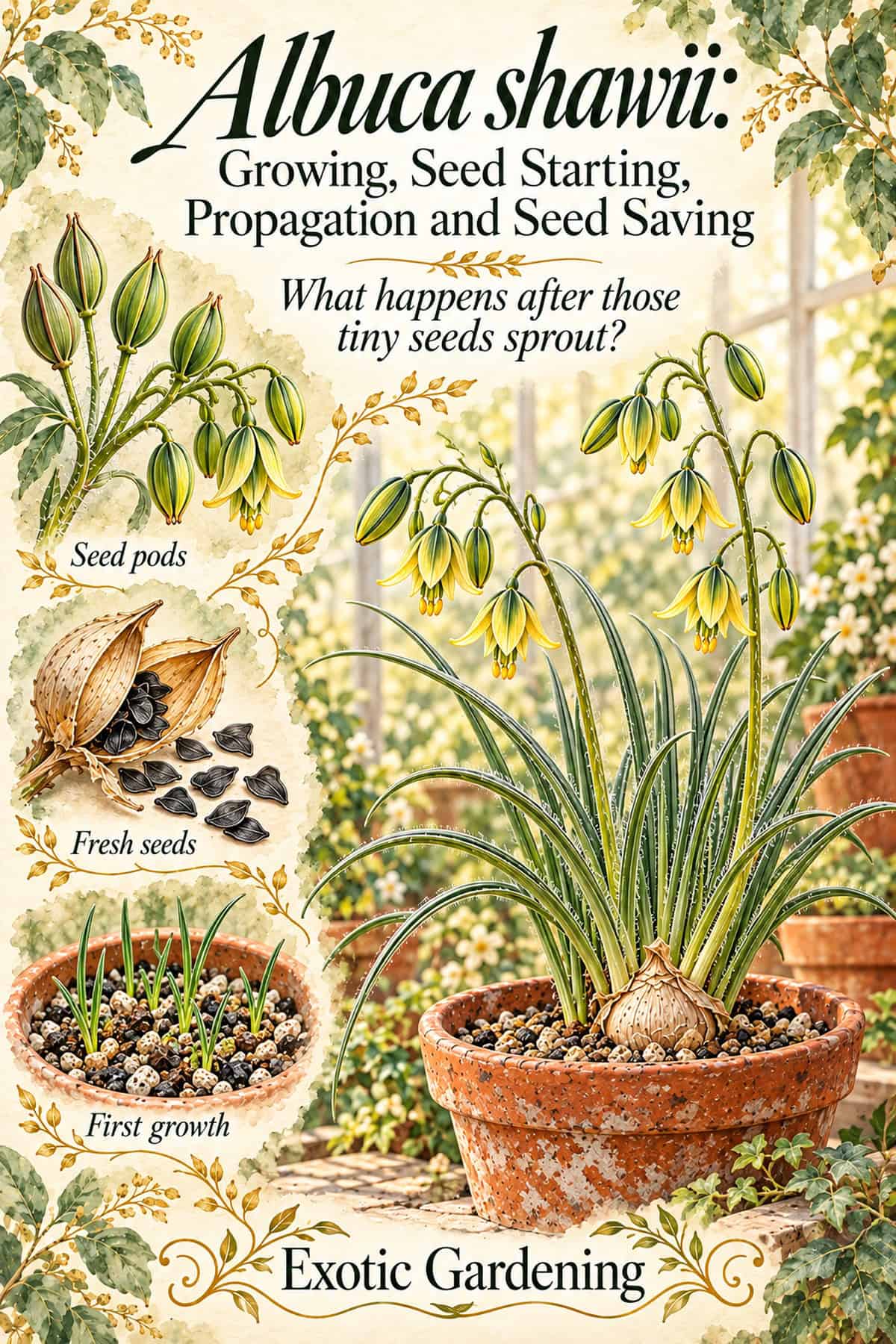
How to Harvest and Save Albuca shawii Seed
- Allow pollinated flowers to develop seed capsules on the plant.
- Check capsules frequently as they mature and begin to dry. Collect before they split and scatter the seed.
- Place a breathable paper bag beneath a drying flower stalk or cut a nearly dry capsule into a labeled paper envelope.
- Let the material finish drying in a shaded, airy place, then separate seed from chaff and discard any moldy material.
- Label the envelope with Albuca shawii, collection date and parent plants if known.
- Prefer sowing fresh seed rather than saving it for years. If you must hold seed briefly, keep it dry and cool, away from sunlight and moisture swings.
- For a viability check, sow a small test batch under appropriate growing conditions and record how many germinate.
Unlike many vegetable seeds, Albuca seed may lose germination capacity relatively quickly. The Pacific Bulb Society notes that fresh seed of the genus often sprouts promptly and that storage can shorten viability. It is better to share or sow surplus fresh seed than assume an old packet will remain dependable indefinitely.
Propagating by Bulb Offsets
Some Albuca shawii plants produce small offsets around the parent bulb, although the rate varies. If offsets are present, wait until an appropriate dormant or low-growth period to unpot the clump. Gently remove loose soil and separate only offsets that detach without substantial damage. Keep a little root tissue with each offset when possible, pot them individually in free-draining medium and resume watering cautiously as growth begins. Do not cut a healthy bulb apart simply because it has not produced offsets. If no offsets appear, seed remains a practical propagation method. Seed-grown plants also provide genetic diversity that can be valuable for future pollination.
Common Problems and How to Prevent Them
Bulb rot: Soft bulbs, sour-smelling soil or sudden collapse often point to excessive moisture and poor drainage. Remove affected material, assess the bulb and correct the growing conditions. Long, weak leaves: Insufficient light can cause stretched growth; increase light gradually. No flowers: Young bulbs may need several seasons to reach flowering size, and inadequate light or disrupted seasonal rest can delay blooms. No seed capsules: Pollination may have failed or a compatible second plant may be needed. Seedlings collapsing: Excess moisture, poor airflow and contaminated media can encourage damping off. Leaves yellowing: This may be normal seasonal dormancy, but check soil moisture and bulb firmness before assuming everything is fine. Slugs and snails: Protect tender seedlings and inspect pots regularly.
Growing Albuca shawii Alongside Other Unusual Bulbs
For a collection of South African bulbs, group plants by their actual growth seasons rather than simply placing every Albuca pot on one watering schedule. A summer-growing A. shawii may need water when a winter-growing species such as A. spiralis is resting. Separate trays, clear labels and a simple seasonal watering log can prevent costly mistakes. If you are growing rare bulbs from seed, keep the original seed packet or accession information. That record can help confirm identity when young plants do not yet show their mature characteristics. My Albuca humilis care and seed-starting guide follows another summer-growing species, while my guide to Albuca species helps put the differences between these bulbs into context.
A Few Questions Gardeners Ask
How long does Albuca shawii take to germinate?
My 2004 seeds emerged in six days, but other seed lots may take longer. Freshness and growing conditions matter.
Does Albuca shawii need cold stratification?
There is no universal cold-stratification requirement established for this species. Start with fresh seed and suitable conditions for a summer-growing bulb rather than automatically chilling it.
Can I save viable seeds from one plant?
Possibly, but not reliably. Seed set depends on successful pollination and compatibility, and some Albuca require genetically different plants.
Is it the same as the corkscrew Albuca?
No. Albuca shawii and Albuca spiralis are different species with different foliage and often different seasonal growth patterns.
Should I water it all winter?
Not on a routine summer schedule if the bulb is fully dormant. Keep it protected and monitor for the return of active growth.
Further Reading
For species identification, seasonal habits and seed-growing notes, consult the Pacific Bulb Society's Albuca shawii profile and its guide to growing bulbs from seed. Their grower reports are particularly helpful because they distinguish summer-growing and winter-growing Albuca species.