There is something especially rewarding about growing unusual plants from seed, particularly when they come from places halfway around the world. Albuca humilis is one of those little botanical treasures that reminds me why I have spent so many years experimenting with exotic plants here in Indiana. Its delicate white flowers, marked with green, might not demand attention from across the garden, but they certainly reward anyone who takes the time to look closely.
I have always enjoyed the challenge of starting plants that most gardeners have never heard of, watching for those first signs of germination and learning what makes each species thrive. Sometimes the smallest bulbs turn out to be the most interesting additions to a collection.
If you are thinking about growing Albuca humilis, I'll walk you through starting it from seed, caring for the bulbs, understanding their seasonal growth, propagating established plants and collecting seeds so you can continue growing this fascinating South African species.
What Is Albuca humilis?
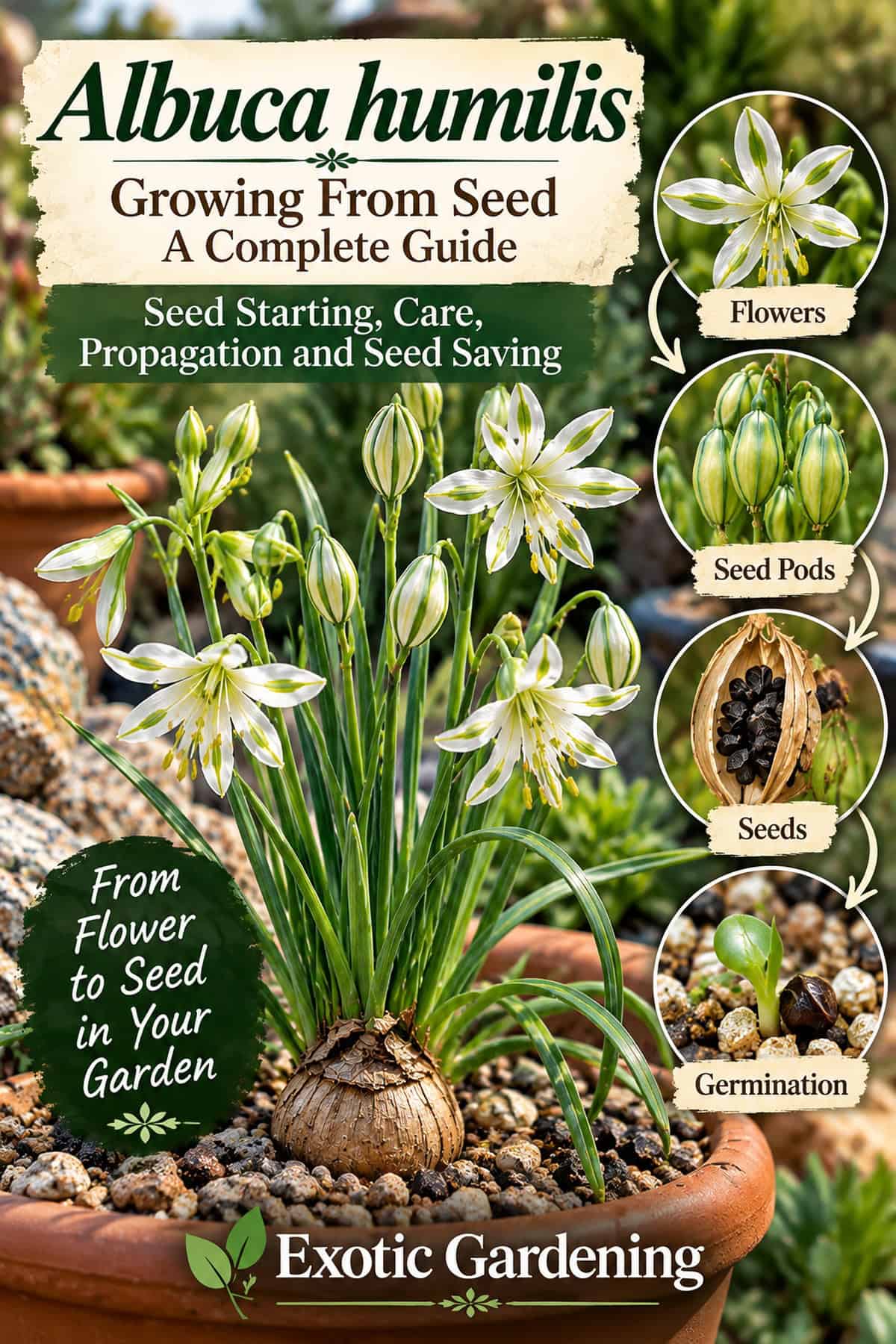
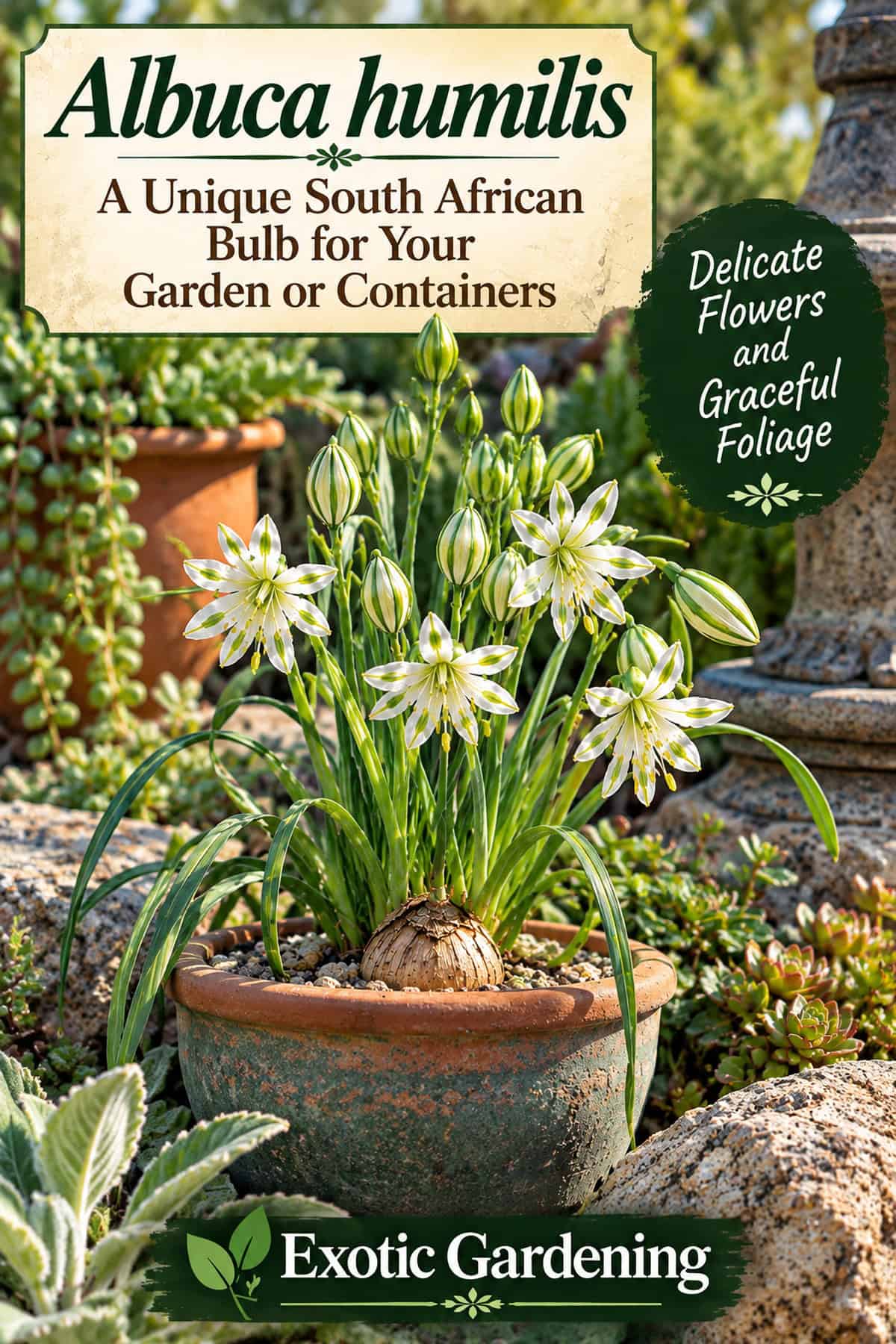
Albuca humilis is a dwarf bulbous perennial from southern Africa. It is not a miniature version of the familiar corkscrew-leaved Albuca spiralis. This species has a few narrow leaves and generally one or two small, white flowers with a green stripe that can darken as the flower ages. Mature plants are often around 4 inches (10 cm) tall, so they reward close observation rather than making a dramatic display from across the garden. The bulbs belong to the asparagus family, Asparagaceae, in the subfamily Scilloideae; older references may place them in Hyacinthaceae. Its summer-growing, winter-resting habit is particularly important for growers who keep several Albuca species together.
My Original Albuca humilis Germination Record
On October 26, 2004, I laid Albuca humilis seed on top of vermiculite in a peat pot. The seeds germinated on November 1, 2004. That is six days between sowing and the first observed germination. I keep these notes because they document what actually happened in my growing conditions. They do not mean every batch will germinate in six days, or that late October is the best sowing date for everyone. Freshness, temperature, moisture and the seasonal rhythm of the bulbs can all change the result.
Understanding the Growing Season
Unlike many winter-growing Cape bulbs, Albuca humilis is generally described as a summer-growing, summer-flowering species that rests in winter. Expect new leaves as growth resumes, flowers during the active season when bulbs are mature enough, and a reduction or loss of foliage as dormancy approaches. Do not force a dormant bulb to remain leafy by watering continuously. Also do not assume every yellow leaf means normal dormancy: a wet pot and a soft bulb can indicate rot. The most reliable guide is a combination of the season, the condition of the leaves and the firmness of the bulb.
Choosing a Pot and Potting Mix
A small clay or plastic pot with unobstructed drainage holes is usually more manageable than planting this tiny bulb in a large, wet container. Use a sharply draining mixture. One practical starting point is a good-quality potting medium blended with generous coarse perlite, pumice or horticultural grit. The exact ratio should suit your watering habits and environment; the goal is a mix that moistens evenly during growth but never stays soggy. Avoid heavy garden soil, especially in a pot. Place the bulb so its neck is close to the soil surface, taking care not to bury the growing tip deeply. Label the pot with the botanical name and seed source. Because the plant is so small, a label can prevent it from being mistaken for an empty pot during dormancy.
Light and Temperature
Give actively growing plants bright light and gradually acclimate them to several hours of direct sunshine. A sunny greenhouse bench or protected outdoor position can work during warm weather. Small pots can overheat or dry very quickly in fierce afternoon sun, so observe the leaves and adjust exposure rather than relying on a fixed rule. In Indiana, bring potted plants into protection before severe freezing weather. Some high-elevation collections of Albuca humilis have survived temperatures below freezing in growers' trials, but their experience should not be treated as proof that every plant or seed source is hardy in Zone 6a. Cold combined with winter wetness may be a greater danger than a brief dry freeze.
Starting Albuca humilis from Seed Step by Step
- Obtain fresh seed. Check the collection date if possible. Albuca seeds can lose viability relatively quickly in storage.
- Choose a suitable sowing time. For this summer-growing species, sowing near the start of active growth is a sensible approach. Indoor lights allow more flexibility, but seedlings still need an appropriate growing cycle.
- Prepare a clean pot. Fill a small container or seed tray with a free-draining seed-starting mixture and moisten it evenly.
- Sow shallowly. Spread the seeds with space between them and press them into contact with the medium. My 2004 trial used surface sowing on vermiculite. A dusting of fine grit is optional; avoid deep burial.
- Water gently. Mist or bottom-water carefully so the seeds are not displaced, then drain away excess water.
- Provide bright, indirect light and moderate warmth. Avoid baking a covered tray in direct sun. If using a humidity cover, ventilate it and remove it once seedlings emerge.
- Keep the surface lightly moist during germination. Never let it remain waterlogged. Germination may be quick with fresh seed, but give slower seed lots time.
- Record the results. Note the sowing date, emergence date, source and number of seedlings. This helps you compare future batches.
Do not discard a pot just because nothing appears in the first week. Germination is a biological process, not a countdown timer, and seed quality varies.
Caring for Seedlings and Growing Bulbs to Flowering Size
Newly germinated Albuca humilis plants are delicate. Give them bright light without harsh, sudden exposure, maintain gentle air movement and avoid letting the medium become stagnant. Water as needed to keep the developing roots active while allowing the top of the mix to begin drying between waterings. As seedlings mature, they build small bulbs that store energy for future seasons. Resist frequent disturbance or premature separation. Many Albuca seedlings need several growing seasons before they flower, so patience is part of the process. When repotting becomes necessary, choose an appropriate resting or low-growth period and handle the tiny bulbs carefully.
Watering and Fertilizing During Active Growth
During the growing season, water thoroughly enough to moisten the root zone, then let excess water escape. Check a small pot frequently in warm weather, since gritty mixes dry more quickly than dense ones. Do not use a rigid weekly schedule. A little diluted balanced fertilizer during active leaf growth may support bulb development, but overfeeding is unnecessary and can leave salts in the potting mix. Flush the medium occasionally with clean water if fertilizer salts accumulate. When leaves naturally begin to die back at the end of the growing season, gradually reduce watering rather than keeping the pot wet in an attempt to preserve the foliage.
Winter Dormancy and Overwintering in Indiana
For a cold-climate grower, container culture offers the most control. As growth ends, reduce water and move the pot to a sheltered place where it will not be soaked by winter precipitation. A cool, dry, frost-free location is the conservative option for a plant of uncertain provenance. You do not need to keep a fully dormant bulb under bright grow lights, but you do need to remember where it is. Inspect occasionally for rot, pests or extreme desiccation. When new growth resumes, gradually return the plant to brighter conditions and begin watering again. Do not abruptly drench a dormant bulb in a cold pot.
Is Albuca humilis Hardy Outdoors?
This is one of the more interesting questions about the species. Pacific Bulb Society contributors have reported plants from high-elevation South African seed sources surviving significant cold, including outdoor gravel-bed conditions in Britain and frozen pots in Massachusetts. These are valuable grower observations, but they do not establish a universal USDA hardiness rating. Provenance matters, and frozen, waterlogged soil can be very different from a dry, well-drained alpine habitat. If you want to experiment, keep your main collection safely in pots and test only a surplus bulb in a raised, exceptionally well-drained bed with a clearly labeled location. Record winter lows, snow cover, moisture and spring emergence. I would not risk my only plant in an Indiana winter simply because another grower's bulbs survived a brief freeze.
Flowers, Pollination and Seed Production
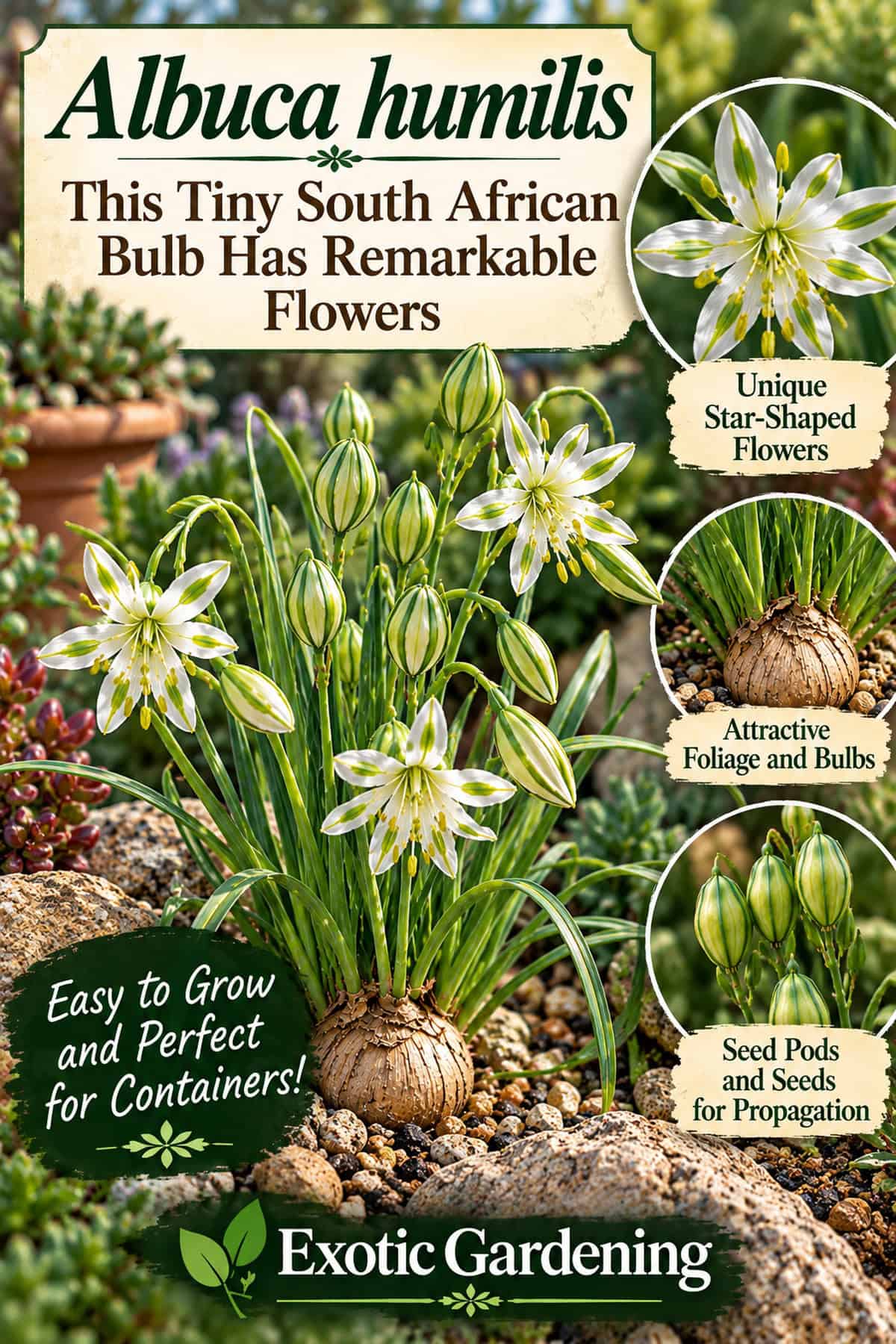
The flowers are typically white with a green central stripe that may become brownish as they age. The plant may produce only one or two flowers at a time, so watch closely if you want seed. Seed capsules form only after successful pollination. A single plant may or may not produce viable seed on its own; compatibility differs across the genus, and two genetically distinct plants often improve the chances of successful seed set. If you have multiple flowering seedlings, use a small clean brush to move pollen between flowers when they are receptive. Mark pollinated flowers and watch for swelling capsules. A spent flower without a developing capsule does not indicate that seed has formed.
How to Harvest and Save Viable Albuca humilis Seed
- Leave successfully pollinated flowers attached until the seed capsules develop and begin to dry.
- Inspect capsules frequently because small seeds can spill when they split.
- Place a small paper envelope or breathable bag beneath the seed stalk if necessary to catch escaping seed.
- Harvest dry or nearly dry capsules and allow them to finish drying in an airy, shaded place.
- Separate seed from chaff, discarding any moldy or damaged material.
- Label each envelope with the species, collection year and parent plants if known.
- Plan to sow fresh seed promptly. The Pacific Bulb Society reports that Albuca seed is often short-lived, with germination declining after storage.
- To check viability, sow a small test batch and record how many seeds emerge.
Viable seed is possible if pollination succeeds and capsules mature, but the fact that a plant flowered is not proof that the resulting seed will germinate. Growing a few genetically different plants from seed is a useful long-term strategy for anyone hoping to collect their own seed.
Can You Propagate Albuca humilis by Offsets?
Some bulbs produce daughter bulbs, but many Albuca species offset slowly or irregularly. Inspect the plant when repotting during dormancy. If there are well-formed offsets that separate naturally, pot them individually in a free-draining mix and wait for active growth before increasing watering. Do not cut apart a healthy bulb to force propagation. When offsets are absent, seed is the more practical way to build a collection. Seed-grown plants may also differ genetically, which can be useful when experimenting with pollination and cold tolerance.
Pests, Diseases and Troubleshooting
Bulb rot: A soft bulb or foul-smelling medium points toward excess moisture or poor drainage. Damping off: Seedlings that collapse at soil level may be suffering from overly wet, stagnant conditions. Weak, stretched leaves: Move plants gradually into stronger light. No flowers: Small bulbs may simply need more time to mature, or they may need a better balance of light and seasonal rest. No seed capsules: Pollination may not have succeeded, particularly if only one clone is flowering. Yellowing foliage: This can be normal at the end of the summer growing season, but check for root problems if the pot is persistently wet. Slugs and snails: Protect seedlings and inspect containers, especially after moving them outdoors.
Albuca humilis Compared with Albuca shawii and Albuca spiralis
All three are bulbous plants in the same genus, but they are not interchangeable in appearance or care. Albuca humilis is a dwarf plant with white, green-striped flowers. Albuca shawii is generally taller and produces yellow-and-green flowers. Both are described as summer-growing species. Albuca spiralis, the well-known corkscrew albuca, is commonly winter-growing and summer-dormant. Labeling pots by species and growth season prevents accidental overwatering during rest. For a broader introduction, see my guide to growing Albuca species.
Frequently Asked Questions
How long does Albuca humilis seed take to germinate?
My seeds germinated in six days in 2004, but other batches may take longer depending on freshness and conditions.
Does Albuca humilis need cold stratification?
There is no well-established universal cold-stratification requirement for this species. Fresh seed and suitable conditions for active growth are the sensible starting point.
Will it survive winter outdoors in Indiana?
Some provenances have shown surprising cold tolerance, but outdoor survival in Zone 6a is not assured. Keep your main plant protected and experiment only with surplus bulbs.
Can one bulb make viable seed?
Possibly, but do not count on it. Successful pollination and genetic compatibility are essential, and multiple seed-grown plants may improve your chances.
Is Albuca humilis an edible bulb?
Do not treat it as edible. Grow it as an ornamental unless a reliable species-specific food-safety source establishes otherwise.
Further Reading
For specialist descriptions and firsthand growing observations, see the Pacific Bulb Society's Albuca reference, its discussion of Albuca humilis and cold hardiness, and a grower's report of bulbs surviving frozen pots. These reports are useful precisely because they describe real plants and growing conditions rather than promising universal hardiness.