Have you ever looked at a chocolate tree and thought, “I wonder if I could grow that without soil?” That's exactly the sort of question that keeps gardening interesting to me. I've grown tropical plants in Indiana for years, and Theobroma cacao has always been one of the most fascinating. It isn't just a pretty houseplant. This is the tree that produces the seeds we turn into chocolate, and there's something wonderful about watching one grow so far from its natural tropical home.
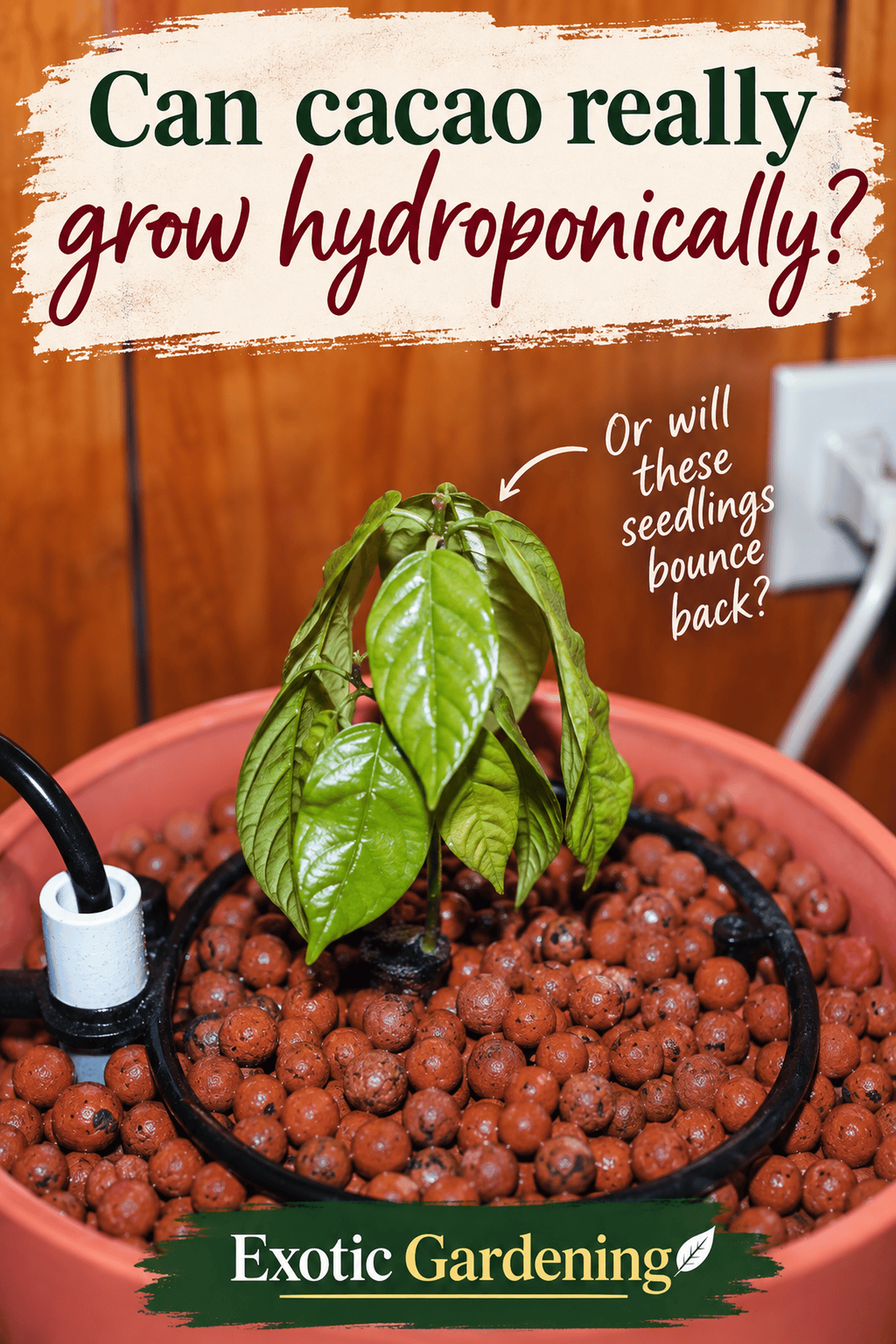
Years ago, I had a connected four-pot hydroponic drip system gifted to me by Worm's Way. It had a pump, four growing pots and a separate main reservoir for the water and nutrients. I already had very young cacao seedlings, only a few weeks old, so I decided to experiment. Why not see what a chocolate tree would do in hydroponics? I removed most of the soil from the roots, though not every last bit, and moved the seedlings into the system. They sulked. Badly. They lost leaves, and for a while I truly thought I was going to lose them. Then, after roughly a couple of weeks as best I remember, new leaves began forming. Once they recovered, the hydroponic cacao grew remarkably well and noticeably faster than the cacao seedlings I had left growing in soil. That recovery and vigorous growth are the heart of this story.
Can You Really Grow a Chocolate Tree Hydroponically?
Cacao can be cultivated in a soilless root environment if its needs for water, mineral nutrients, oxygen and support are met. The harder question is how to keep a woody tropical tree thriving that way over the long term. A young cacao seedling is not a head of lettuce. It needs room for an expanding root system, warmth, humidity and enough stability to develop into a substantial plant.
My experiment began with seedlings only a few weeks old, and I was able to compare their growth with cacao seedlings that stayed in soil. After the initial setback, the hydroponic plants grew much faster in my experience. That doesn't mean every cacao tree will do better in every hydroponic system, and I am not claiming to have harvested pods from this setup. It does mean that I witnessed the plants recover from a difficult transplant and then thrive.
Why I'm Experimenting with Hydroponic Cacao
I enjoy finding out what tropical plants will tolerate outside their usual growing conditions. Here in Indiana, cacao already requires special attention during cold weather. Adding a soilless growing system gives me another variable to study: how well the roots adjust and whether I can keep moisture and nutrients consistent without conventional potting soil.
The transition was frightening enough that I thought the plants might die. Losing leaves after moving from soil to hydroponics is not a pretty sight, especially when you're experimenting with a tropical tree. But the new growth that followed about two weeks later told a different story. Once they settled in, the plants grew so well that I could see a marked difference compared with the seedlings still growing in soil.
What My Cacao Seedlings Look Like During the Transition
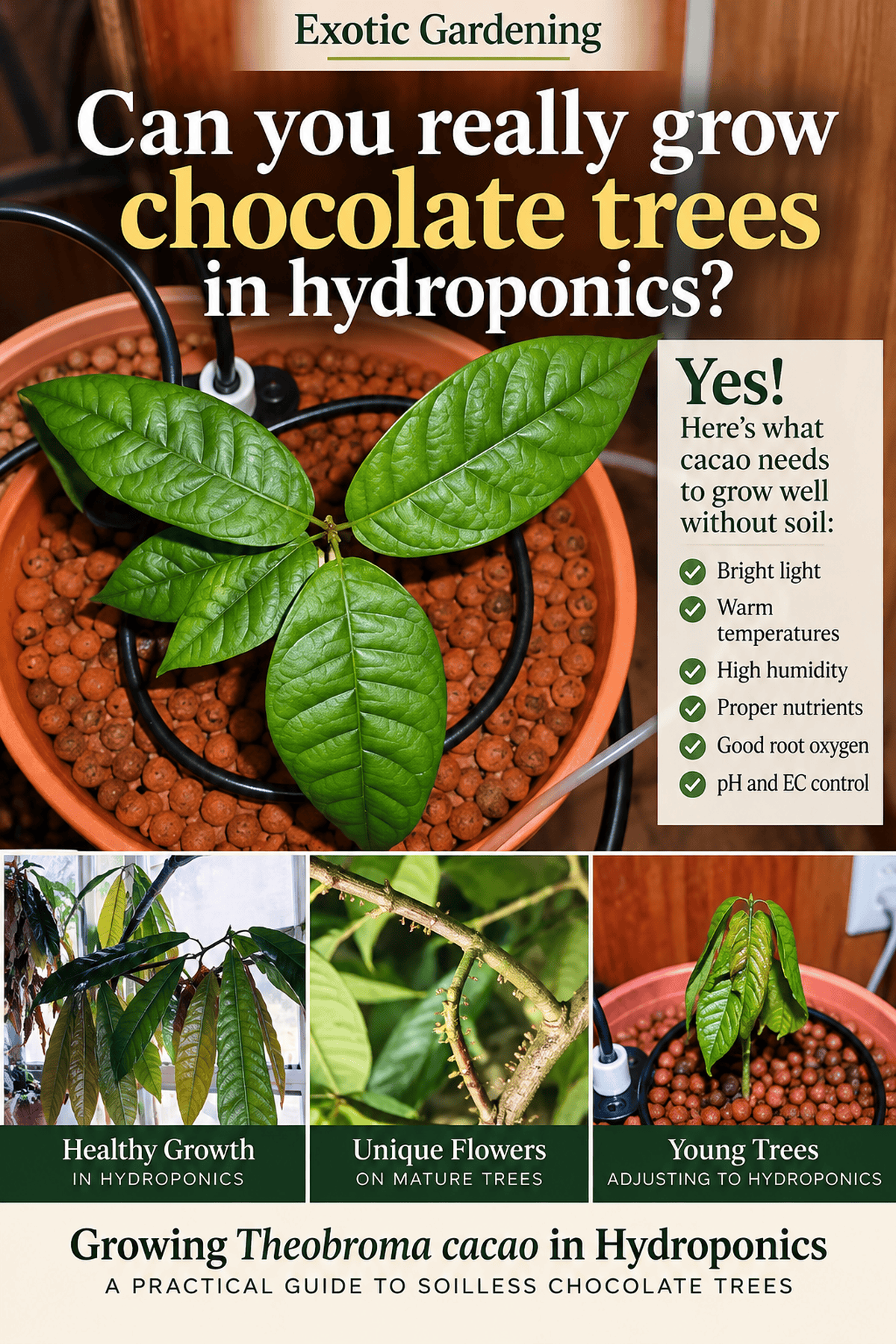
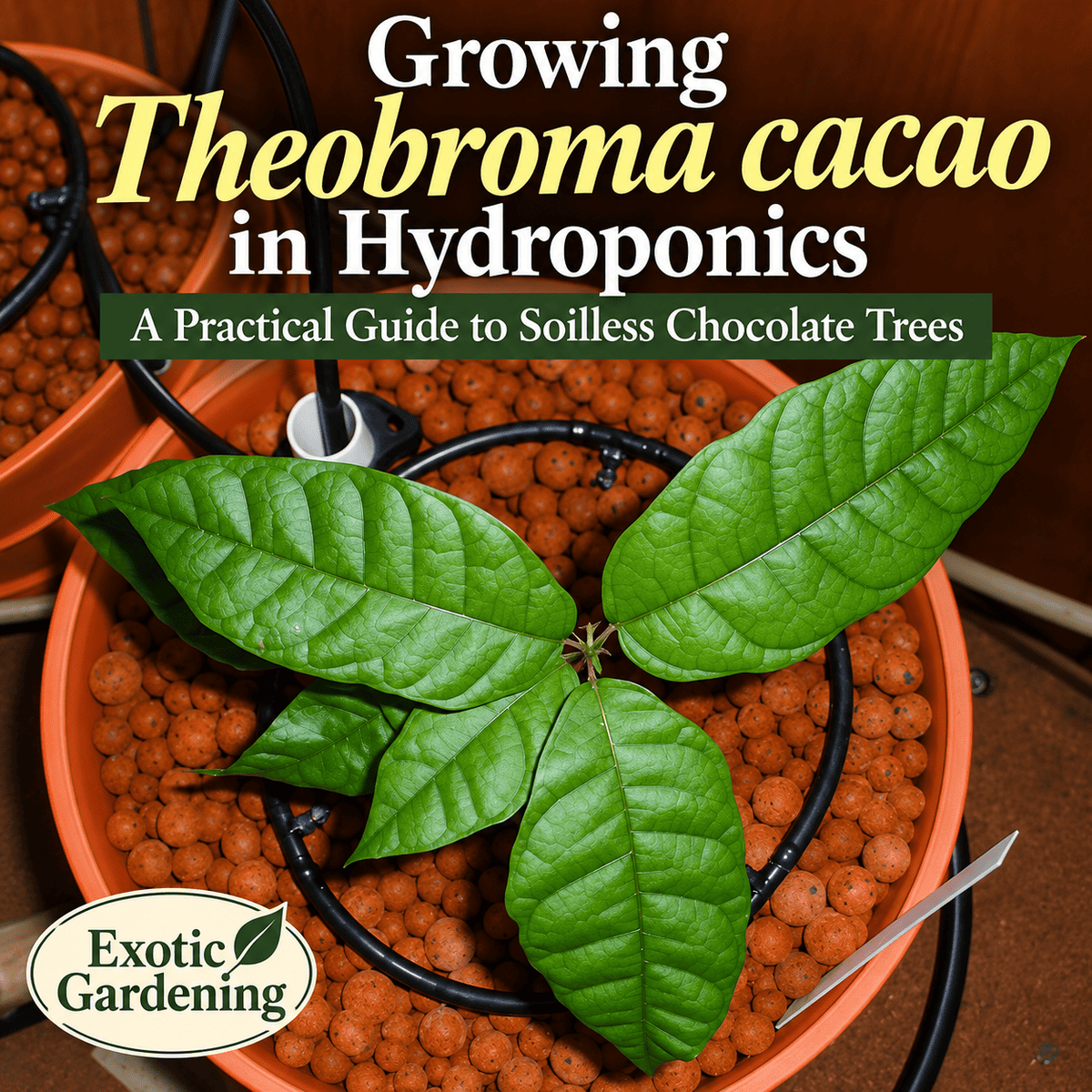
The photographs show young cacao plants during a real experiment, not a staged demonstration. The plants lost leaves after I removed most of the soil and moved them into the drip system. I genuinely worried that I had made a terrible mistake. I kept caring for them, and new leaves began to appear after what I remember as roughly two weeks.
Once the new foliage appeared, the growth took off. Compared with my soil-grown cacao seedlings, the hydroponic plants grew very well and very quickly. That was the surprise: the early leaf loss looked like failure, but the later growth was much stronger than I expected.
There are several possible causes of transition stress: disturbed feeder roots, a sudden change in moisture or oxygen availability, changes in nutrient strength, dry air, or light and temperature differences. A photograph alone cannot establish which one is responsible. I want to observe the plants carefully before drawing conclusions.
Choosing a Hydroponic Method for Theobroma cacao
Hydroponics does not have to mean dangling roots in a tank of water. It includes several ways of growing plants without traditional soil while supplying mineral nutrients through water. For a young cacao tree, the root environment needs to remain moist without becoming oxygen-starved.
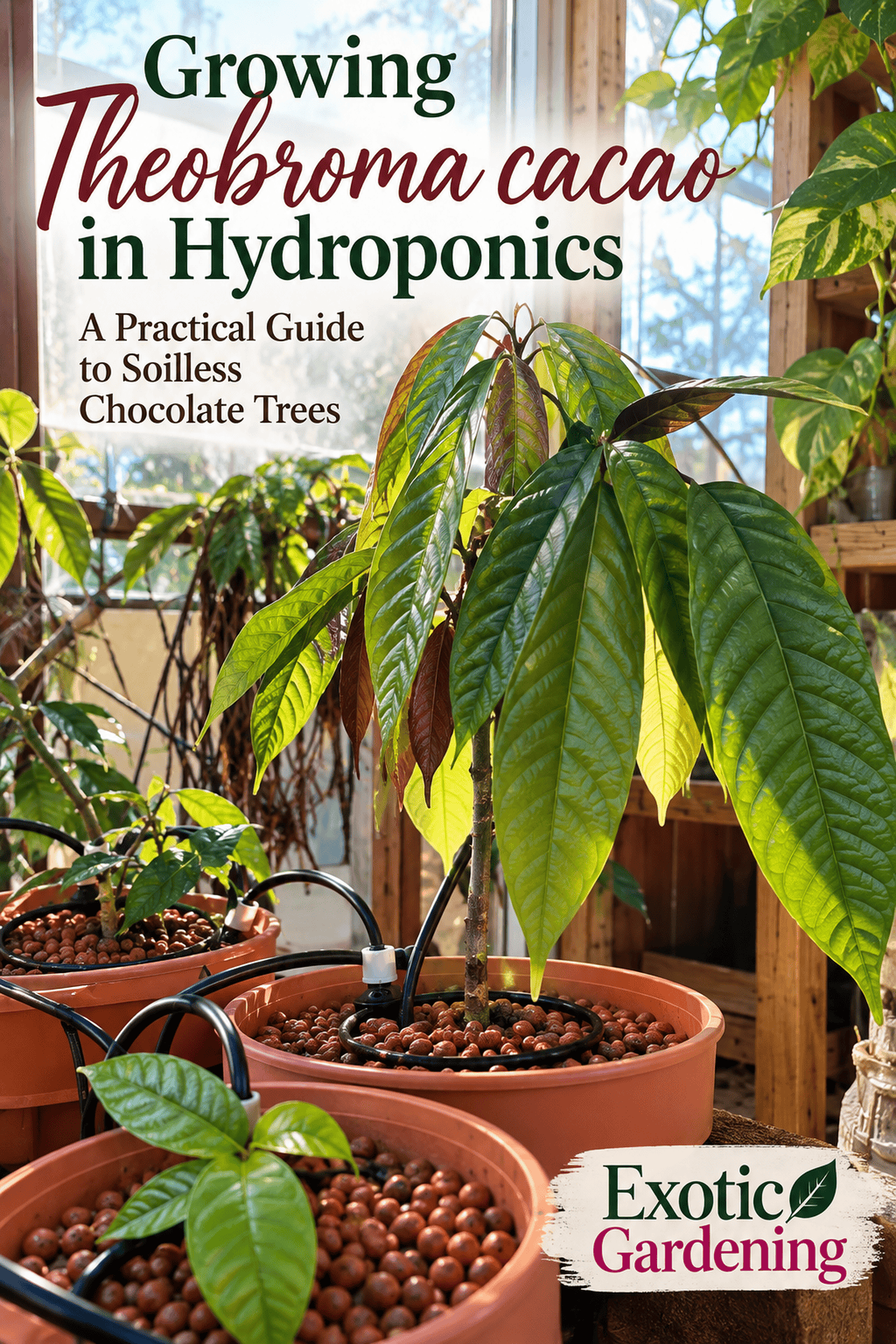
My connected drip system used a pump to move nutrient solution from the main reservoir to four growing pots. The clay pebbles shown in my photographs are LECA, or lightweight expanded clay aggregate. They provide support and air spaces around roots, but do not feed the plant by themselves. I used ordinary hydroponic nutrients and normal pH management rather than a special cacao formula. I no longer remember the system's exact model name or the precise nutrient readings, so I won't invent them.
A drip-fed container with an airy soilless medium is another option worth considering as a tree grows. Perlite is commonly used in hydroponic growing mixes because it provides air spaces around roots, although the right medium depends on the system. Deep-water culture requires reliable aeration and substantial support. Small countertop hydroponic gardens are generally not built for long-lived trees. Rather than claiming one system is universally best, I would choose a setup that allows me to inspect the roots, monitor moisture and make changes without disturbing the plant unnecessarily.
Starting with Healthy Cacao Seeds and Seedlings
Freshness is especially important with cacao seed. Unlike seeds that can sit dry in a packet for years, cacao seeds are sensitive to drying and can lose viability quickly. If you're beginning from seed rather than an established plant, start with fresh, viable material and keep the germination environment warm and evenly moist without letting it become stagnant.
My step-by-step guide to germinating cacao seeds covers the earlier part of growing a chocolate tree. For hydroponic culture, I would establish a healthy seedling first and then make the transition carefully. The less root damage during the move, the better the chance of a smooth adjustment.
If your seedling was started in potting mix, don't underestimate the disruption caused by removing that mix from the roots. Fine roots can break easily. Avoid rough washing and don't force roots into a narrow container. A seedling already under stress needs stable conditions, not repeated handling.
The Growing Conditions Cacao Still Needs
The first thing to remember is that hydroponics does not make cacao any less tropical. It still needs warmth, humidity, appropriate light and protection from drafts. The root system and the leaves must both be comfortable if the plant is going to grow well.
Warm temperatures
Cacao generally favors warm growing conditions, often around 70 to 85°F (21 to 29°C). In my experiment, I used a thermometer to monitor the water temperature and help keep the nutrient solution warm. I would avoid exposing the plant or nutrient solution to cold nights, cold windowsills or dramatic temperature swings. An unheated Indiana greenhouse is not a safe place for cacao through winter.
Bright but filtered light
Young cacao trees commonly grow with some shade in tropical environments. Indoors, bright filtered light or appropriately positioned grow lights are usually more sensible than suddenly exposing tender leaves to intense midday sun. If leaves develop scorched areas, I check light and heat before assuming the fertilizer is wrong.
Humidity with airflow
Indoor heating can dry the air dramatically in winter. Cacao appreciates a humid environment, but still needs gentle air movement. Stagnant, constantly wet foliage can create disease problems. A hygrometer is useful because the air can feel comfortable to us while being far too dry for a tropical seedling.
Feeding Cacao in a Hydroponic System
One question I have while experimenting is what fertilizer strength these young plants will tolerate best. A complete hydroponic fertilizer should supply nitrogen, phosphorus, potassium, calcium, magnesium and micronutrients. I would begin conservatively with seedlings, following the product's mixing guidance rather than assuming that the concentration used for tomatoes or lettuce is appropriate for cacao.
Two measurements can help make sense of the nutrient solution. The first is pH, which influences nutrient availability. A mildly acidic starting range, around pH 5.5 to 6.5, is common in soilless growing, but it is not a proven cacao-specific optimum. The second is electrical conductivity, or EC, which gives an indication of dissolved fertilizer salts. There is no single reliable home-hydroponic EC target I can promise for cacao at every growth stage.
If the leaves begin yellowing, I don't want to automatically reach for more fertilizer. The problem might be stressed roots, unsuitable pH, too little oxygen, cold conditions or poor light. Adding more nutrients to an already stressed plant can make matters worse.
The Biggest Challenge: Keeping Roots Moist and Oxygenated
When someone says hydroponics, it's easy to focus on water. I think the more useful question is whether the roots are getting enough air. Roots need oxygen to function. If the growing medium stays saturated and stagnant, the plant can wilt even though plenty of water is present.
With LECA or another airy medium, the water level and irrigation method matter. Roots should have access to moisture without the entire root zone remaining oxygen-starved. In a recirculating system, reservoir cleanliness and aeration are especially important. I would inspect the roots whenever possible and watch for firm new growth rather than sliminess, decay or an unpleasant smell.
I also watch how quickly the container loses moisture. A small seedling may use water very differently from a larger tree. There is no useful universal instruction to water hydroponic cacao every few days. The right schedule depends on the system, plant size, temperature and humidity.
How I Would Evaluate Whether the Seedlings Are Recovering
This is the part I'm most interested in documenting as my plants adjust. Rather than judging success from one good day or one bad photograph, I want to look for a pattern over several weeks.
Look for new growth
Fresh leaves that develop normally are more encouraging than an older damaged leaf that stays green. Some existing leaves may remain curled or marked even after the roots begin recovering.
Check root health
If the setup allows inspection, look for firm roots and new root tips. Brown color alone does not always diagnose root rot, particularly when growing media or nutrient solutions stain roots. Texture, odor and the plant's overall response matter.
Keep conditions consistent
I would record temperature, humidity, light exposure, nutrient changes and any adjustments to water level. When several things change at once, it becomes much harder to know what helped.
Give the plant time
Woody tropical seedlings may take time to respond after root disturbance. I would not keep removing and replanting a stressed cacao seedling just because it hasn't perked up overnight. On the other hand, rapidly collapsing roots or a foul-smelling reservoir call for action, not patience.
Common Problems When Growing Cacao Hydroponically
Drooping leaves: Check the roots and the water level, then consider temperature, humidity and transplant shock. A wet container doesn't guarantee that the roots can absorb water.
Yellowing foliage: Look at new versus old leaves, root condition, nutrient strength, pH and light. Yellowing has several possible causes.
Brown or crispy edges: Dry air, excess salts, inconsistent moisture, root injury and strong light can all contribute. Don't assume one cause without checking.
Little or no new growth: A recently transitioned plant may need time to establish functioning roots. Make sure the growing area is warm enough and that the nutrient solution is not too concentrated.
Algae or unpleasant odors: Keep light out of the reservoir, remove debris and clean equipment. Check whether the roots have adequate oxygen.
Could a Hydroponic Cacao Tree Eventually Produce Chocolate Pods?
Wouldn't it be something to see a chocolate tree grown in a hydroponic system reach the point of flowering? Cacao can take years to mature, and fruiting brings another set of challenges. The plant needs enough room, suitable light and nutrition, stable tropical conditions and successful pollination.
Cacao flowers are tiny and are naturally pollinated by small insects, including midges. Indoor or greenhouse growers may need to explore hand pollination, but that doesn't guarantee fruit set. For the seedlings I'm working with now, healthy new roots and leaves are the immediate goals. Chocolate pods are a much bigger, longer-term question.
Hydroponics Versus Potting Mix: Which Would I Recommend?
If you're simply hoping to keep a cacao tree alive indoors, a well-drained potting mix may be more forgiving than a hydroponic system that needs regular monitoring. Hydroponics gives you another way to control the root environment, but it also means paying attention to nutrient solution, oxygen, equipment and sanitation.
I wouldn't call hydroponics better just because it's different. I would call it an experiment worth exploring if you enjoy growing unusual plants and learning how they respond. You can read more about my longstanding interest in this tropical tree in My Theobroma cacao Story and explore the Theobroma cacao videos. For more of the practical methods behind this experiment, see my hydroponic seed-starting guide. I also bring together related growing guides in the Growing Cacao & Chocolate Gardening collection.
Questions Gardeners Ask About Hydroponic Cacao
Can I put a cacao seedling directly into a jar of water? I wouldn't consider a plain jar of stagnant water a dependable long-term growing system. The roots need oxygen, nutrients and support.
Is LECA enough to feed the plant? No. LECA provides physical support and air spaces, but not a complete nutrient supply. Nutrients must come from the water and fertilizer program.
Should I remove damaged leaves right away? Not automatically. If a leaf is still functioning and isn't diseased, it may continue supporting the plant. I would prioritize correcting the growing conditions and watching new growth.
Will the seedlings in my photographs bounce back? I hope so, but I can't promise it from their appearance alone. Their root condition and subsequent growth will tell the story.
Can cacao stay hydroponic all winter in Indiana? Only if its tropical temperature, humidity, light and root-zone needs are maintained indoors or in a heated growing space.
The Part of This Experiment I'm Most Excited About
This experiment taught me not to judge a plant's future by the first ugly weeks after a major change. I moved very young cacao seedlings out of soil and into a four-pot hydroponic drip system, watched them lose leaves, and thought I might lose the plants. Instead, they put out new leaves and grew faster than the seedlings I left in soil. That is why I still find hydroponic growing so fascinating. I also wrote about my broader hands-on hydroponics experiments for Growing Edge, including articles titled One Gardener's Introduction to Hydroponics and Propagation. Those published experiences are part of the background to this cacao story.
If you've tried growing cacao in LECA, semi-hydroponics or another soilless system, I'd love to hear about it. Did your plants drop leaves during the transition? How long did it take to see new roots or fresh foliage? Sharing the things that work, and the things that don't, is how we all become better gardeners.




Leave a Reply