Lobster claw heliconia stopped me in my tracks when I saw it blooming at the Garden Writers Association symposium in Indianapolis. I have always loved tropical plants, but those dramatic, brightly colored bracts looked almost too perfect to be real. There I was, surrounded by gardeners and garden writers, completely captivated by a plant that would never survive an Indiana winter outdoors.
It reminded me of a garden club event a few years earlier, when a dear friend in Puerto Rico shipped me banana flowers, gingers and heliconias. People kept reaching out to touch the flowers because they could hardly believe the colors and shapes were natural. Seeing a blooming lobster claw heliconia brought back that same sense of wonder.
Of course, admiring one is much easier than growing one in a cold climate. If you are as tempted by unusual tropical plants as I am, there are practical questions to answer first: How much warmth and space does it need? Can you overwinter it indoors? Will a piece of rhizome grow into another plant, and is starting heliconia from seed worth trying? Here is what gardeners need to know before bringing this extraordinary plant home.
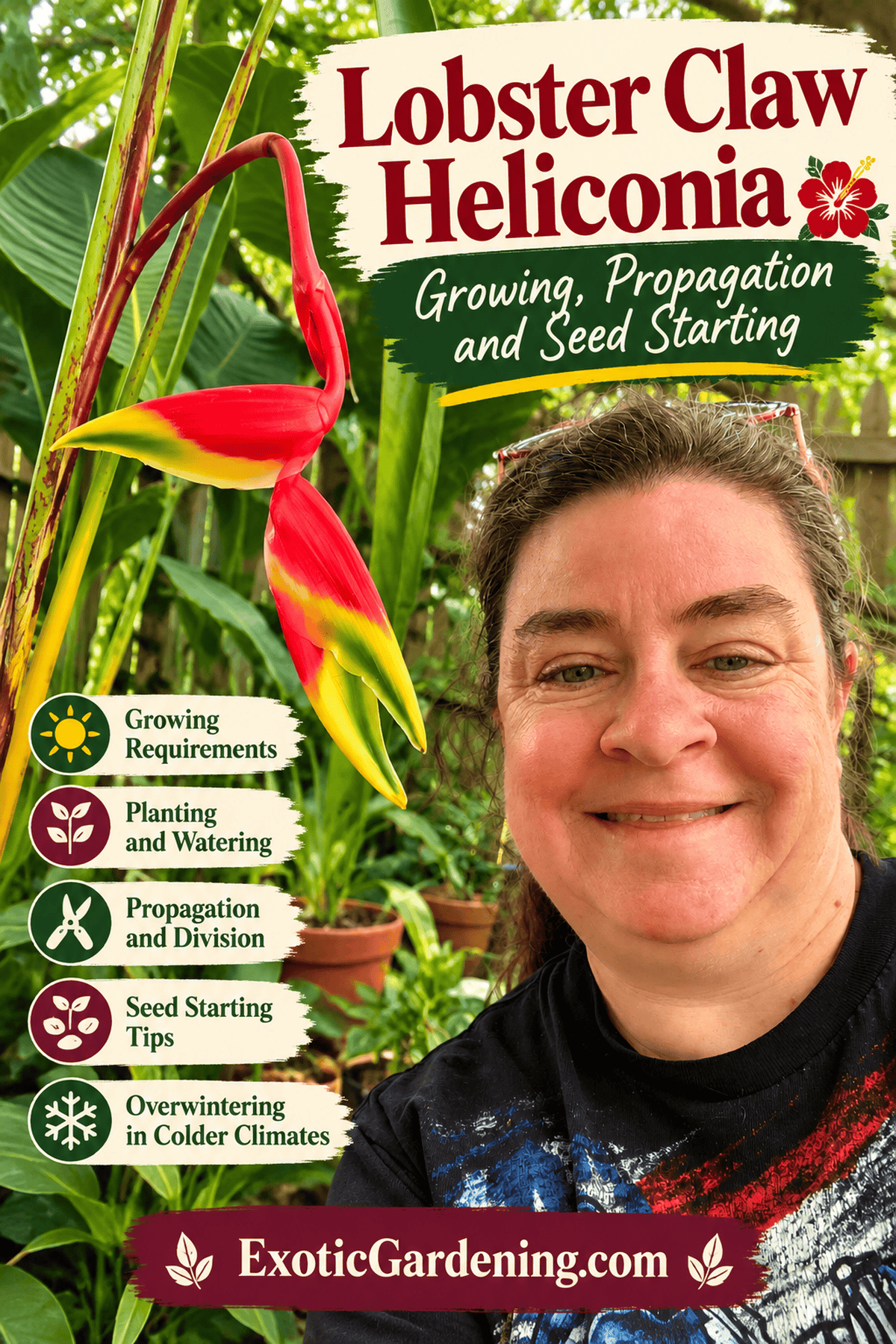
Why Lobster Claw Heliconia Looks So Unreal
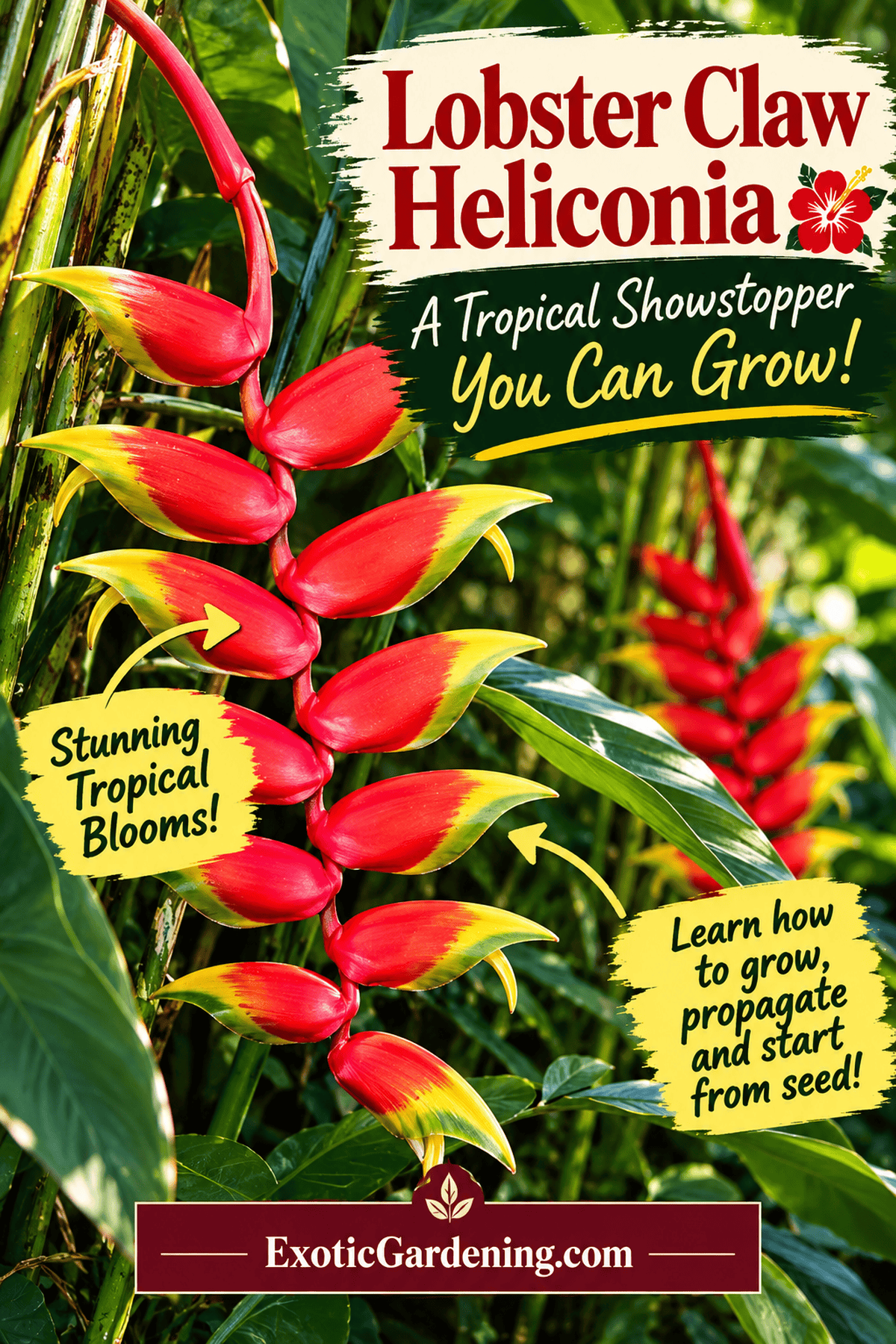
The dramatic hanging clusters most gardeners call lobster claws are associated especially with Heliconia rostrata, though the common name is also applied to other heliconias. What looks like a row of colorful flowers is actually a series of waxy bracts, often scarlet with yellow and green edges. The true flowers are much smaller and emerge from within those bracts. The bracts can hold water, and the flowers are adapted for pollination by tropical hummingbirds. Because my original post does not identify the photographed plant to species, I would not claim it was definitely H. rostrata without checking the image and its label.
Choosing the Right Heliconia for Your Space
Heliconias range from comparatively compact plants to towering tropical clumps. The large, pendent lobster-claw types can reach several feet in height and spread widely by rhizomes, so a small windowsill pot is not a realistic long-term home. Before buying, check the botanical name, mature height, flowering habit and whether the plant forms upright or hanging bracts. For a greenhouse or sunroom, a smaller species or cultivar is often more manageable than a full-sized H. rostrata. Even a small heliconia needs room for its leaves and expanding underground stems.
Light, Warmth and Humidity
Heliconias thrive with warmth, bright light and protection from cold. Many grow well in partial sun or bright filtered light, while some lobster-claw forms tolerate full sun when well established and adequately watered. Acclimate a greenhouse-grown plant gradually before exposing it to intense outdoor sunshine. Warm, humid air supports active growth, but humidity must be balanced with airflow to discourage fungal problems. Avoid cold drafts, icy window glass and abrupt temperature swings. If leaves scorch, look at recent changes in light and moisture before assuming the plant needs fertilizer.
Soil, Containers and Planting
Use a large, stable container with generous drainage holes and a fertile, moisture-retentive but well-drained potting mixture. A combination of quality potting medium, composted organic matter and a coarse drainage component is a practical starting point. The mix should hold moisture without turning into a stagnant swamp. Plant rhizomes at approximately the depth they were growing before, with developing shoots oriented upward. Give the plant enough space to produce new stems. In warm-climate landscapes, allow for a broad clump and keep it away from structures or beds where its rhizomes would become a nuisance. University of Florida Extension recommends fertile, moist soil and full to partial sun for lobster-claw heliconia.
Watering and Feeding for Strong Growth
During warm, active growth, heliconias use substantial water. Water thoroughly until moisture drains from the pot, then check again before the root zone dries excessively. The goal is consistent moisture, not standing water. Plants growing in large containers outdoors may need frequent watering during hot weather, while those kept in cooler indoor conditions will need less. Feed during the active season with a balanced fertilizer that supplies micronutrients, following label directions. Reduce fertilizer when growth slows. Brown leaf edges can result from low humidity, inconsistent watering, accumulated salts or root problems, so examine the growing conditions rather than treating every symptom with more fertilizer.
Growing Lobster Claw Heliconia Outdoors in Indiana
In USDA Zone 6a, heliconia is not a reliably hardy in-ground perennial. University of Florida Extension lists Heliconia rostrata for tropical conditions around Zones 10B to 11. An Indiana gardener can enjoy it outdoors during reliably warm weather, but it must be protected before temperatures approach damaging cold. A large pot on a sheltered patio can be moved back into a heated greenhouse or indoor growing area. Moving a mature clump is physically demanding, so plan for the final container weight before planting. I would not leave a prized lobster-claw heliconia in the ground and expect its rhizomes to survive a Midwestern winter.
How to Overwinter Heliconia Indoors
- Inspect foliage, leaf sheaths and the soil surface for insects before bringing the plant inside.
- Remove dead or damaged leaves with clean pruners, but keep healthy green stems that can support future growth.
- Move the pot to a warm location with the brightest practical light or suitable supplemental grow lights.
- Maintain moderate humidity and good airflow. Avoid setting the pot against cold windows.
- Adjust watering to the reduced indoor light and growth rate, keeping the root zone lightly and evenly moist rather than waterlogged.
- Stop heavy feeding until vigorous new growth resumes.
- Inspect weekly for spider mites, mealybugs and scale, especially on leaf undersides and within sheaths.
- Reacclimate the plant gradually to outdoor light and wind when warm weather returns.
Heliconia is not a bulb that should automatically be dried down and stored like a dormant gladiolus corm. Its living rhizomes are best managed according to the species and their condition, and prolonged cold, dry storage can kill tropical material.
Propagating Heliconia by Rhizome Division
Division is the most dependable method for multiplying a favorite lobster-claw heliconia and preserving its appearance. The rhizomes are horizontal underground stems that send up new leafy shoots. A division with a healthy rhizome, roots and at least one viable growing point has a much better chance than a leaf stalk cut off without its underground stem.
- Wait until warm conditions favor active root growth, ideally spring or early summer.
- Water the plant beforehand so the root ball is easier to work with.
- Remove the clump from its pot or carefully expose part of the rhizome system.
- Use a clean, sharp knife or spade to separate a substantial section containing roots and a healthy shoot or growing bud.
- Trim away dead or rotting tissue. If a division has very large leaves and few roots, reduce some foliage to limit moisture loss.
- Repot promptly into fresh, well-draining, moisture-retentive mix at the original planting depth.
- Keep the division warm, humid and in bright filtered light while roots reestablish.
- Water consistently but avoid saturating damaged roots. Resume light feeding after active growth is evident.
Divisions are clones of the parent plant, which makes this the preferred way to preserve a particular bract color and growth habit. Do not divide a weak or tiny plant simply to make more pots.
Can Lobster Claw Heliconia Grow from Seed?
Yes, some heliconias produce viable seeds after successful pollination, but seed propagation is slow, inconsistent and often much less practical than dividing rhizomes. The true flowers are adapted to specialized pollinators, and plants outside their native range may never set fruit. A spectacular bract display alone is not evidence that viable seeds have formed. Different species and hybrids may have different fertility, and seedlings from a cross may not resemble the parent. Seeds can also have dormancy that makes germination erratic or very slow. If you have a rare, correctly identified seed lot, treat it as a patient experiment rather than a quick route to a flowering plant.
Starting Heliconia from Seed Step by Step
- Identify the seed. Obtain seed from a reputable supplier who lists the botanical species and collection date. Avoid assuming that seeds sold only as “lobster claw” belong to H. rostrata.
- Use fresh material. Heliconia seed is often best sown soon after collection. Drying or prolonged storage may reduce viability in some species.
- Clean the fruit. If collecting ripe fruit, remove all surrounding pulp and rinse the seeds. Wear gloves and wash hands after handling unfamiliar plant material.
- Follow species-specific pretreatment. Some growers soak cleaned seeds to hydrate the coat, but scarification and dormancy treatments vary. Do not cut deeply into an embryo or assume a treatment for one species works for every heliconia.
- Prepare a clean, deep container. Use a sterile, free-draining but moisture-retentive seed-starting medium.
- Sow at a shallow, appropriate depth. Cover the seed lightly according to supplier instructions and label the species and date.
- Maintain tropical warmth. A consistently warm propagation area, often around 75 to 85°F for many tropical species, is more appropriate than cold stratification.
- Keep evenly moist and ventilated. Avoid drying the medium completely, but do not let seeds sit in stagnant water.
- Wait patiently. Germination can be sporadic and may take months or longer. Do not discard a labeled pot after only a few weeks.
- Grow seedlings on gradually. Give emerging plants bright filtered light, warmth and room for roots. Move them into larger containers as they establish.
Seed-grown heliconias can take several years to reach flowering size, and the exact timeline depends on the species and conditions. For most home gardeners who want a known lobster-claw plant, a healthy rhizome division is a better investment.
Pollination, Fruit and Saving Viable Seeds
If your plant produces fruit, allow it to ripen according to the species before harvesting. In heliconias, fruit development follows successful pollination of the small true flowers, not the colorful bracts themselves. Collect ripe fruit, remove pulp and clean the seeds. Record the parent species or cultivar, date and whether another heliconia was flowering nearby. For species whose seeds are sensitive to drying, prompt sowing is safer than treating them like ordinary dry vegetable seed. Seed viability can only be confirmed by appropriate testing or successful germination; a firm-looking seed is not a guarantee. When a named ornamental is a hybrid, seedlings may be variable, so use rhizome division if you need plants identical to the parent.
How to Encourage Lobster Claw Heliconia to Bloom
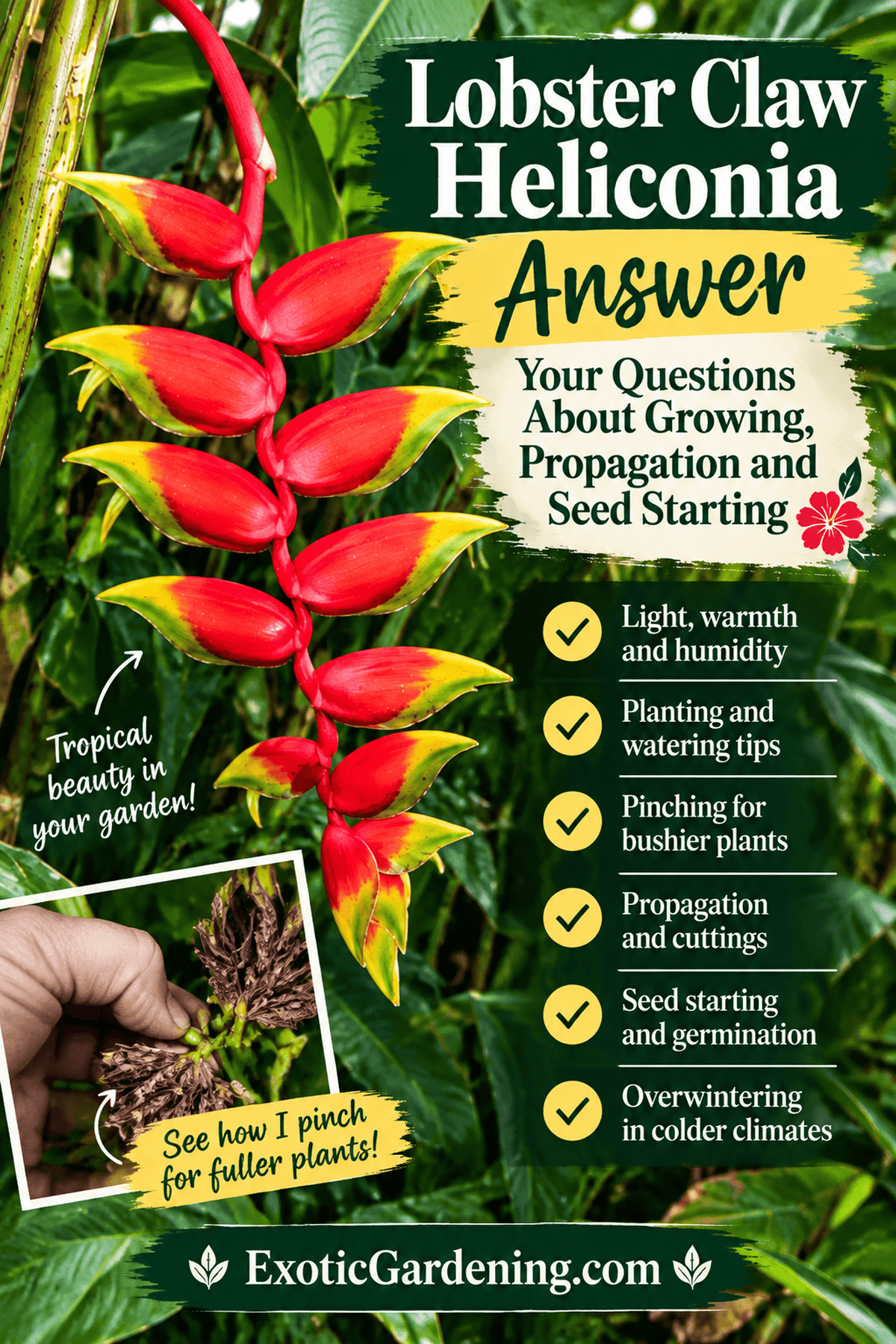
First confirm that the species is capable of flowering at the size and age of your plant. Many large heliconias need a substantial, mature clump and well-developed stems before they bloom. Provide the right amount of light, sustained warmth, consistent moisture and adequate nutrition during active growth. Avoid cutting back every green cane when bringing the plant indoors. Individual shoots flower once, and some types need a long growing period before an inflorescence develops. A plant that survives winter but repeatedly loses all mature stems may remain leafy without producing the dramatic display you want. Lack of bloom can also reflect insufficient light or a container that severely restricts growth.
Cut Flowers and Long-Lasting Tropical Arrangements
Heliconia bracts are prized in tropical floral design because their sculptural shapes and waxy texture hold attention. Cut mature inflorescences early in the day with clean, sharp tools and place the stems promptly into clean water. Choose stems with well-developed bracts and no signs of bruising or decay. Keep arrangements out of cold drafts, refrigeration temperatures suited to temperate flowers, and direct heating vents. Remove fading stems promptly and refresh water and containers regularly. For a home-grown plant, consider leaving some blooms intact for the full garden display rather than cutting every inflorescence.
Common Heliconia Problems
Brown leaf edges: Check watering consistency, humidity, fertilizer salt buildup and drafts. Yellowing lower leaves: Some older leaf loss is normal, but widespread yellowing may signal poor roots, inadequate light or nutrient imbalance. Soft rhizomes: Investigate excess water, cold damage and rot. Leaf spots: Improve airflow, avoid splashing foliage unnecessarily and remove badly affected tissue; University of Florida Extension notes that fungal leaf spots can affect lobster claw. Scale and mealybugs: Inspect leaf sheaths and undersides, isolate affected plants and use an appropriate labeled control if necessary. No flowers: Assess maturity, light, warmth and whether flowering stems are being cut down too soon. Weak divisions: A rhizome piece without sufficient roots or a growing bud may fail to establish.
My Recommendation for Cold-Climate Heliconia Growers
After seeing that extraordinary bloom at the Garden Writers Association symposium in Indianapolis, I understand the temptation to bring home the largest lobster claw heliconia available. But if you garden where winters are cold, think about where the plant will live in January before deciding where to put it in July. A mature heliconia can become a substantial clump, and moving a large, wet container indoors is not nearly as easy as bringing in a small houseplant.
I recommend starting with a correctly identified plant that suits the space you have for overwintering. Protect its rhizomes and healthy stems, provide as much appropriate light and warmth as you can, and treat seed starting as a separate, long-term experiment. If the spectacular hanging red-and-yellow display is what captured your imagination, check the botanical name before buying: the classic pendent lobster claw is commonly Heliconia rostrata, but several different heliconias are sold under similar common names.
That first bloom made me want to know more about the plant, not just admire it. Growing one in Indiana takes planning, but understanding its tropical needs is where a successful experiment begins.
Frequently Asked Questions
Is lobster claw heliconia the same as bird of paradise?
No. Heliconias and birds of paradise are distinct plant groups, although both have striking tropical inflorescences and are sometimes confused in common names.
Can lobster claw heliconia survive an Indiana winter outdoors?
Not reliably. Treat it as a tropical container or greenhouse plant and protect it from frost.
Can I root a cut heliconia flower stem?
No. Ordinary cut flower stalks do not include the rhizome and growing point needed for reliable propagation. Divide healthy rhizomes instead.
Are heliconia seeds viable?
They can be after successful pollination and fruit development, but germination is often slow and inconsistent. Some hybrids may have limited fertility.
Will heliconia grown from seed look identical to the parent?
Not necessarily. Seedlings may vary, especially after cross-pollination. Rhizome division preserves the parent's traits.
Why does my heliconia grow leaves but no flowers?
Common reasons include insufficient light, cool temperatures, immature stems, a small or stressed clump, and removing shoots before they reach flowering age.
Further Reading
For a broader overview, read my guide to growing heliconia. University of Florida IFAS Extension also offers research-based information on heliconia care and Heliconia rostrata. For a specialist discussion of the challenges of germinating heliconia seeds, see the Heliconia Society of Puerto Rico's observations on seed germination.