February garden tasks range from simple maintenance jobs to bigger seasonal projects like tapping maple trees and starting seeds indoors. Even though it still feels like winter in many regions, February is one of the most important months for setting up a successful spring garden.
This is the time to purchase any last-minute seeds, clean and sanitize used flowerpots, and stock up on seed-starting supplies such as potting mix, peat pots, plant tags, and organic fertilizers. It’s also wise to test indoor grow lights and replace weak bulbs before seedlings begin stretching toward insufficient light.
If you use heating mats for seed starting, plug them in now to make sure they’re functioning properly. Discovering a faulty mat after seeds are planted can delay germination and weaken young plants.
Below are the essential February garden tasks that help you move confidently from winter into the growing season.
February Garden Tasks That Set Up Your Entire Growing Season
February can feel like a waiting month, especially in colder climates where snow still lingers and the ground remains frozen. But in reality, February is one of the most strategic times of the entire gardening year. The work you do now determines how prepared, productive, and organized your garden will be once spring truly arrives.
From tapping maple trees and finishing syrup production to starting seeds under lights, testing heat mats, cleaning pots, and preparing cold frames, February garden tasks lay the foundation for everything that follows. This is the month where thoughtful preparation prevents rushed decisions in March and April.
Whether you grow vegetables, flowers, or both, staying intentional in February allows you to move into the growing season with confidence instead of playing catch-up. When seeds are started on time, equipment is tested early, and seasonal projects like maple tapping are handled properly, the transition from winter to spring feels smooth and manageable - not chaotic.
Tapping Maple Trees
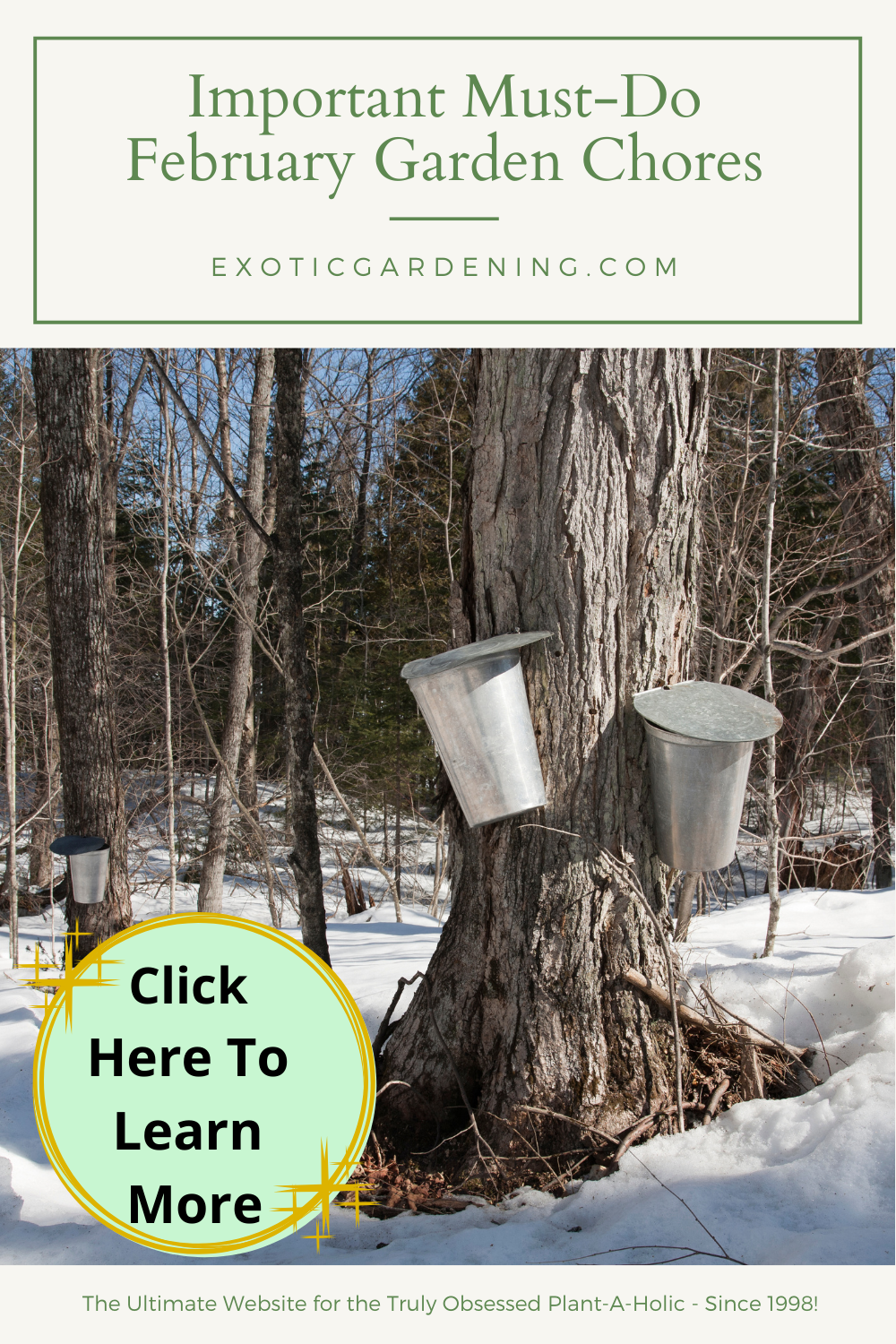
Tapping maple trees is one of the most rewarding February garden tasks - and for many gardeners, it marks the true beginning of the growing season.
If you’re new and wondering how to tap maple trees properly, the key is selecting healthy trees at least 10–12 inches in diameter and drilling a properly sized hole at a slight upward angle to encourage sap flow.
While February 1 is often considered traditional tapping day, I always watch the weather more than the calendar. Sap flows best when daytime temperatures rise above freezing and nights drop below it. Those freeze-thaw cycles create the pressure changes that move sap through the tree.
Sugar maples produce the highest sugar content, but any healthy maple tree can provide sap that can be boiled down into syrup.
Once taps are installed, containers are placed beneath them to catch the flowing sap. During strong runs, those containers can fill quickly, so daily monitoring is essential. There is nothing more discouraging than losing sap because a container overflowed.
On average, it takes 40 to 50 gallons of sap to produce just one gallon of maple syrup - a ratio that surprises many first-time tappers.
As sap is collected, it’s boiled down in stages. I prefer boiling outdoors because the steam released during the process can leave sticky residue on walls and ceilings. When cooking over a wood fire or grill, constant attention is required. The sap must be stirred and the fire managed carefully to prevent scorching.
As the temperature approaches 219°F, the sap transitions into syrup. Cook it further, and it will crystallize into maple sugar.
For me, tapping maple trees isn’t just about syrup. It’s about stepping outside in late winter, watching the first signs of seasonal transition, and participating in a process that connects gardening, food preservation, and self-sufficiency.
If you’d like to see this process in action - from tapping the trees to boiling sap and even infusing it with cinnamon - I’ve documented our entire maple season over on ExperimentalHomesteader.com and on YouTube. You can watch how we collect sap, manage outdoor boils, monitor temperature as it reaches syrup stage, and turn it into everything from maple candy to infused syrups.
Maple tapping may begin as a February garden task, but it quickly becomes a full homestead kitchen project.
February Seed Planting Dates
While making maple syrup is the big garden task in February, there are other tasks to do in preparation for the spring garden.
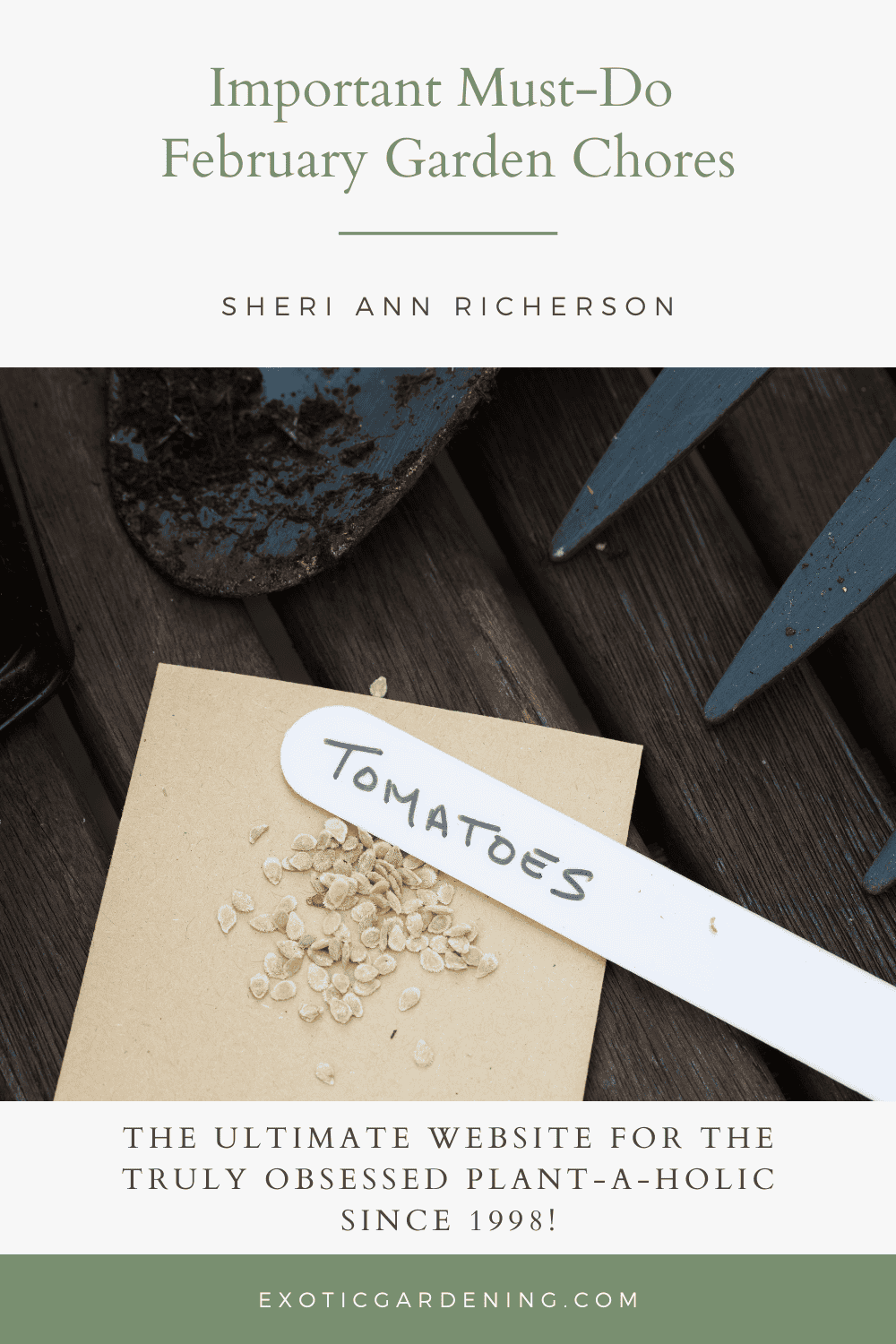
One of the most important is starting seeds.
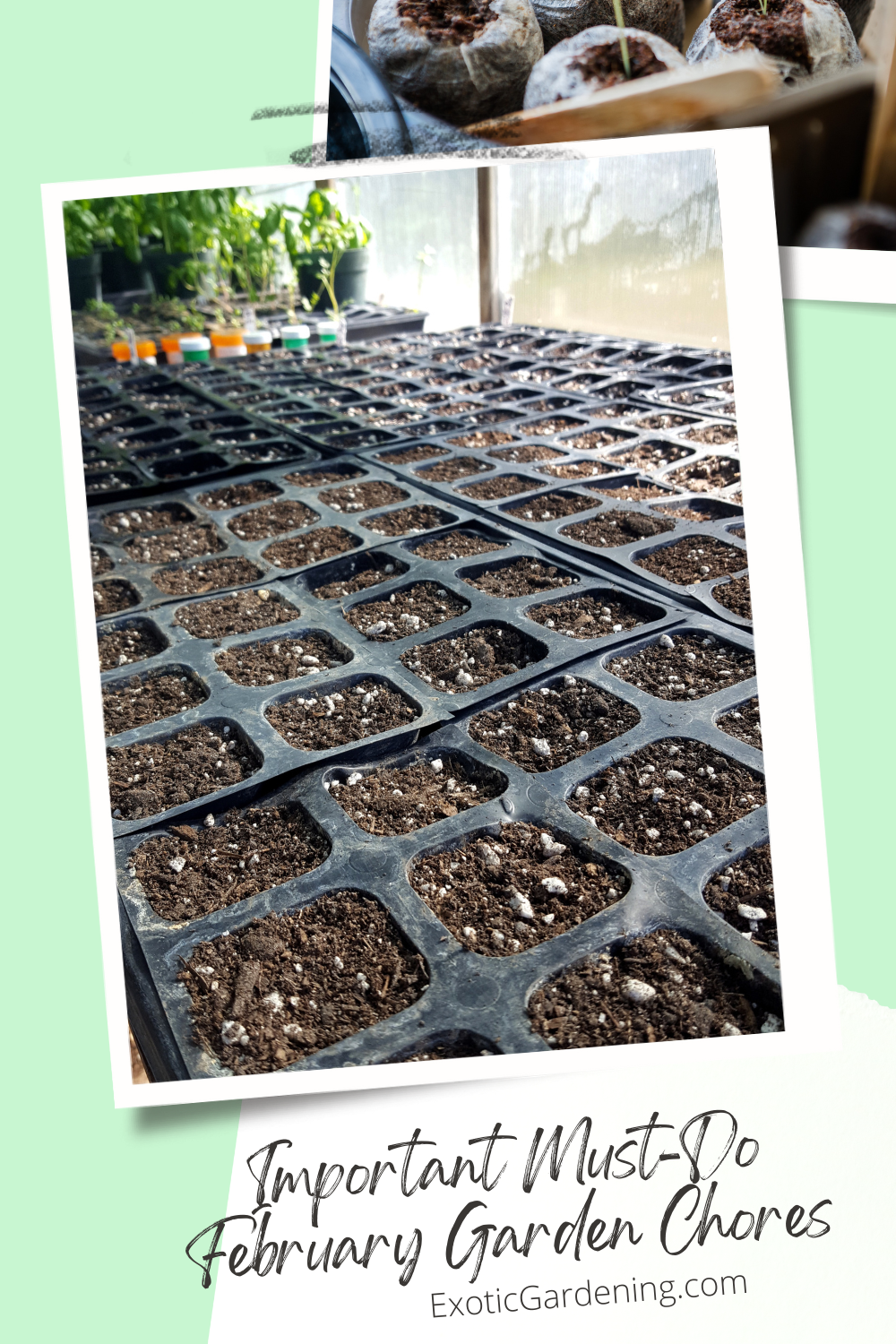
Indoors on February 4, plant seeds of gerbera daisy, achillea, petunia, wax begonia and impatiens.
Impatiens can be a bit tricky for some gardeners to germinate.
Sow impatiens in vermiculite to prevent dampening off and provide plenty of light, high humidity and 70 degree F temperatures to germinate.
Indoors on the second Monday of February, sow seeds of salvia, marigold, strawflower and calendula.
Remember to sow a few extra marigold seeds to use as companion plants in the vegetable garden.

February 15, pre-sprout any un-planted potatoes in preparation for planting in the cold frame the following week.
Plant seeds of artichoke seeds indoors in flats.
February 16, plant seeds of peppers, tomatoes and eggplants indoors in flats.
By February 23, if all hard freezes are over in your area or you have a way to provide supplemental heat to your cold frames or tunnel houses if needed, go ahead and plant young cabbage plants and onions.
Potatoes can be planted under cover on this day as well.
Check Your Garden Supplies
February is a good time to check your garden supplies and clean up things like flower pots from last season.
I like to wash my used flower pots, seed starting trays and other related items in warm soapy wash, then rinse them off with slightly hotter water and give them a final rinse with hydrogen peroxide.
Now some people prefer to use a bleach solution to sterilize their flower pots and seed starting items, but I prefer hydrogen peroxide because I don't have to worry about making sure it is rinsed off.
When a bleach solution is used, if any if left on the pots or seed starting trays, it can kill off any plants or seeds you start.
While hydrogen peroxide might cost a little more, it is a safer option in my opinion.
This is also a good time to check your grow lights to make sure they are still working well and putting out sufficient light.
If they are not, make a list and look for end of season sales so next fall you don't end up paying full price or having to worry about being able to find what you need in time.
Take Advantage of Warm, Sunny Days
Another February garden task many people overlook is weeding.
Take advantage of those warm, sunny days to get out into your garden and pull weeds.
Pay attention to what bulbs or perennials are popping up.
If you plant witch hazels, hellebores, or other late winter blooming plants, February is often when they bloom and you might just be surprised at how many native insects are out enjoying the nectar!
Crops To Harvest In February
Besides maple syrup, try tapping walnut or birch trees in February.
Check on your winter garden crops to see what is ready to harvest.
Lettuce is one crop that usually makes it through the winter.
Depending on how harsh of a winter you've had, if you did not till your garden up in the fall, you might find kale, Swiss chard, Brussels sprouts of other cool season crops still in the garden.
Underground look for potatoes, carrots and Jerusalem artichokes.
It is possible to find some herbs just starting to sprout or even some wild edibles.
The easiest way to know what crops to harvest in February is know the area you live in and forage for edibles - or simply look in your cold frames or tunnel house.

This post is part of the #GardenBloggersChallenge sponsored by Gardencomm for the month of May. You are invited to join in and can see more details at gardencomm.org
Seed Starting
Kickstart your gardening journey with our curated Seed Starting Resources! This handy list is packed with everything you need to grow healthy plants from seed, whether you're a beginner or an experienced gardener. Discover essential tools, step-by-step instructions, and expert tips for selecting the best seeds, preparing your soil, and creating the ideal conditions for germination. From seed trays and grow lights to organic fertilizers and watering techniques, this resource has it all. Perfect for planning your next gardening adventure and ensuring success every step of the way!





How To Plant Brugmansia Seeds
Learn how to plant Brugmansia seeds as well as why you might want to start these fragrant night blooming plants from seed.

Arisaema Seed Germination: Faster blooms from seed grown plants
Arisaema seed germination is easy as long as you have fresh seeds. You can even trick seed grown plants into blooming faster.

Product Review: Burpee Eco-Friendly All-In-One 25-Plant Greenhouse Kit
I gave the Burpee Eco-Friendly All-In-One 25-Plant Greenhouse Kit a try. Learn how to use it and what I thought of it.

Seed Starting: Snapdragon
When it comes to seed starting, snapdragon are pretty easy. You can direct sow snapdragons. Learn about growing snapdragons from seed.

Growing Aristolochia baetica from Seeds: A Detailed Guide for Success
A detailed image of Aristolochia baetica with its characteristic pipe-shaped flower and bulbous base, surrounded by green leaves.





Leave a Reply